

.svg)

.svg)
%201.png)


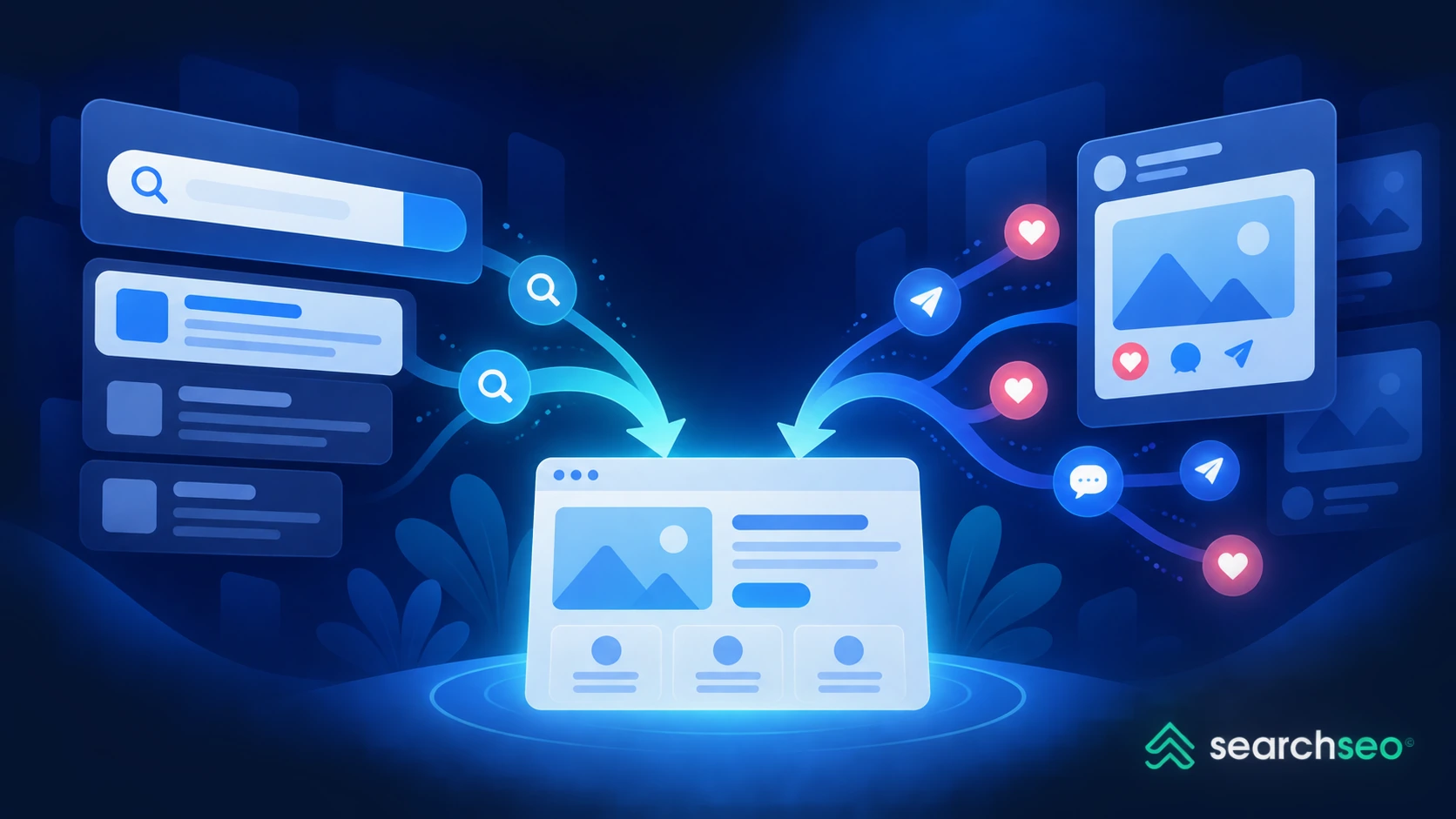
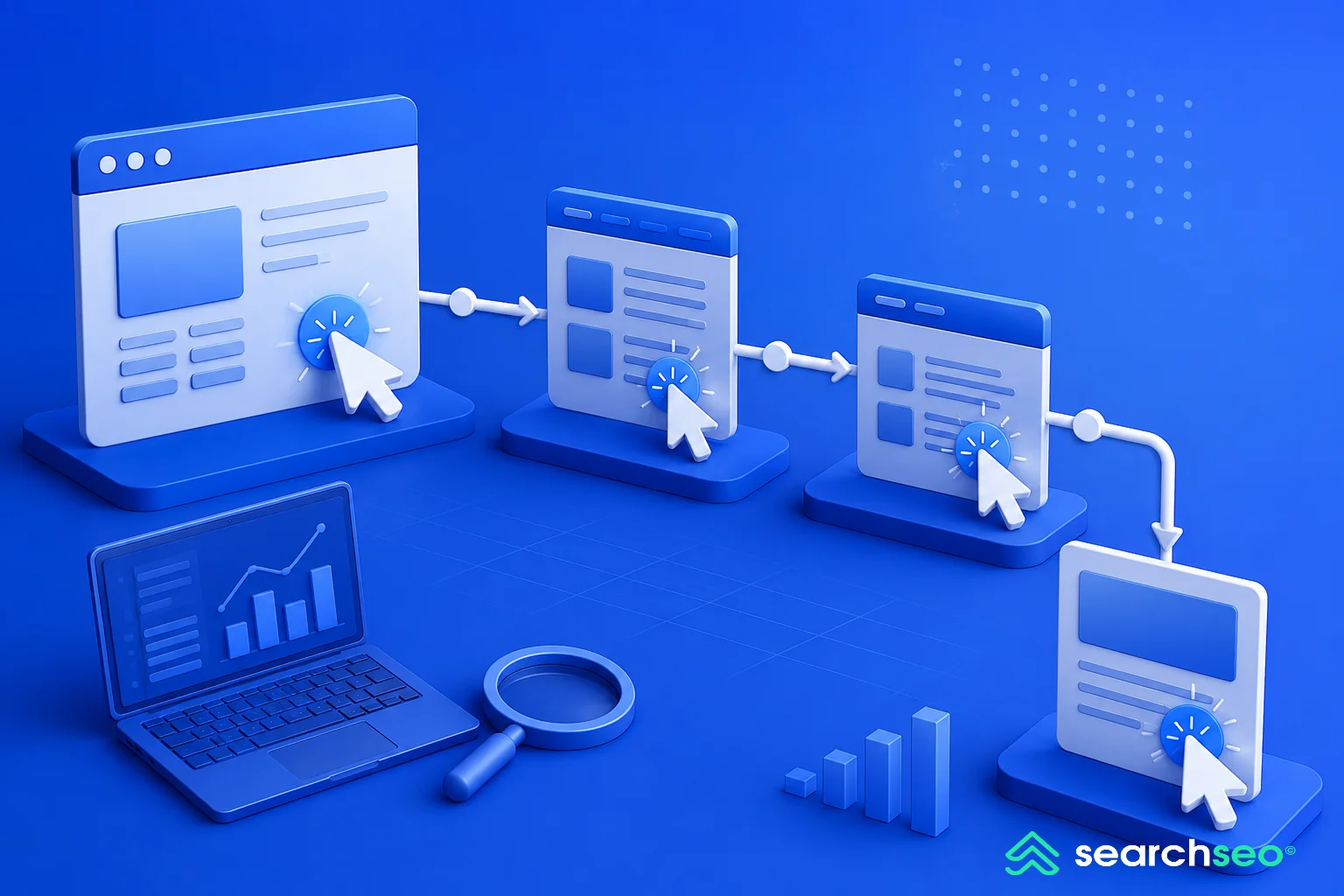

When businesses talk about SEO success, they often focus on one metric: traffic.
But traffic alone does not grow a business.
A website can generate thousands of blog visits every month and still struggle to produce leads or sales. On the other hand, a website with only commercial landing pages may convert well but never attract enough organic visibility to scale.
The reality is that successful SEO strategies require both blog traffic and commercial page traffic working together.
Informational content helps attract users early in the buying journey, while commercial pages convert that attention into business results. Ignoring either side creates gaps in your SEO funnel that limit growth.
In this article, we’ll break down the difference between blog traffic and commercial page traffic, why both matter, and how to build an SEO strategy that balances visibility with conversions.
For a stronger long-term framework, it also helps to understand how a complete SEO strategy supports every stage of the search journey.
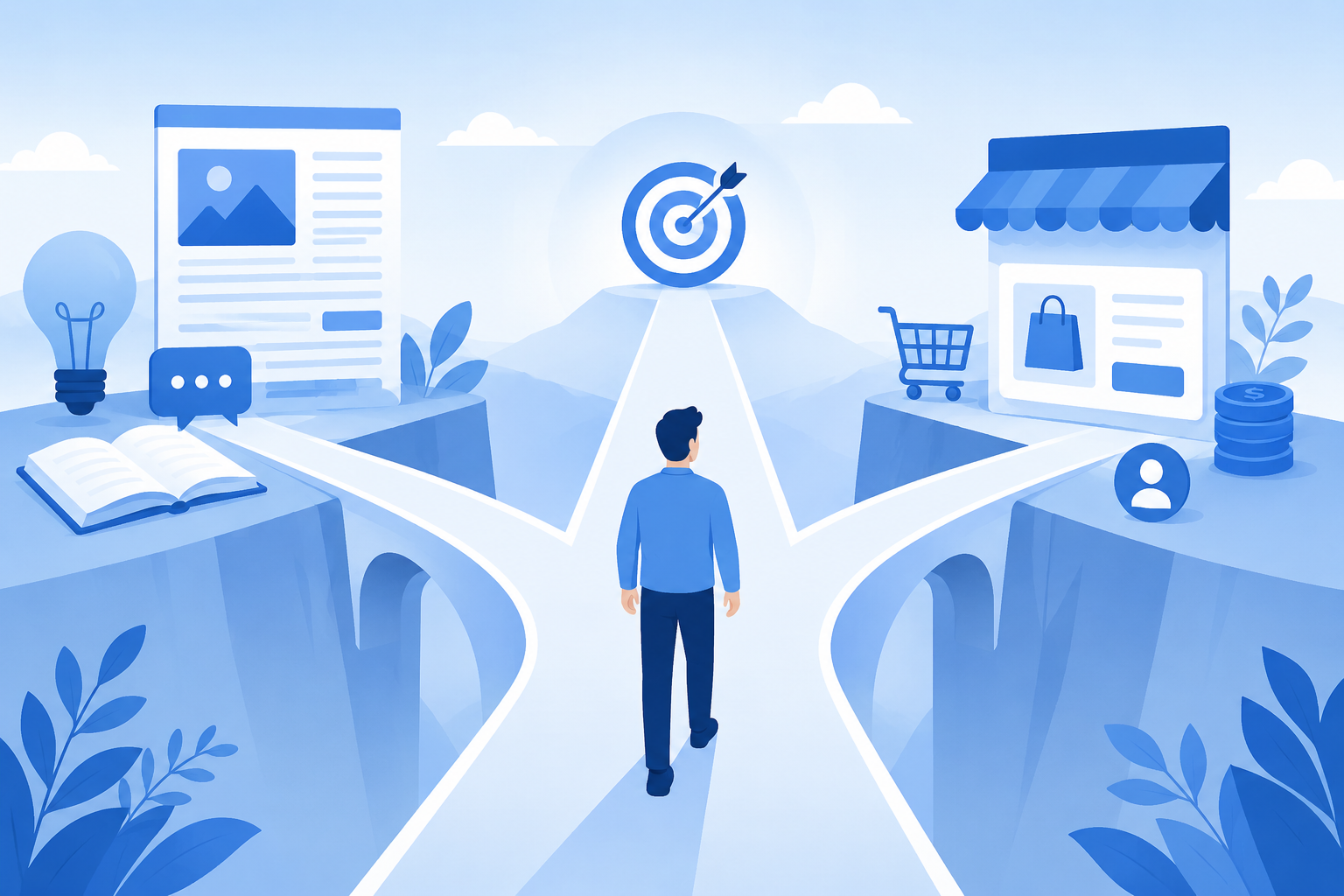
Understanding the difference between traffic types
What is blog traffic?
Blog traffic usually comes from informational searches.
These are users searching for answers, education, comparisons, tutorials, or industry insights. They may not be ready to buy immediately, but they are actively researching a problem or topic.
Examples include searches like:
- “how to improve website traffic”
- “why SEO rankings dropped”
- “what is topical authority”
- “best SEO tools for startups”
Blog content helps websites:
- Build visibility across many keywords
- Capture top-of-funnel audiences
- Establish expertise and trust
- Increase brand awareness
- Support internal linking strategies
This type of traffic is often broader and higher volume.
However, blog visitors are usually earlier in the customer journey, meaning conversion rates are typically lower compared to commercial pages.
That does not make blog traffic less valuable.
In many cases, blog content is what introduces users to your business in the first place.
What is commercial page traffic?
Commercial page traffic comes from users with stronger buying intent.
These visitors are searching for products, services, pricing, providers, or solutions. They are closer to making a decision.
Examples include searches like:
- “SEO agency pricing”
- “buy SEO traffic”
- “best SEO services for SaaS”
- “technical SEO consultant”
Commercial pages include:
- Service pages
- Product pages
- Landing pages
- Pricing pages
- Demo or consultation pages
Unlike blog traffic, commercial traffic tends to have:
- Lower search volume
- Higher conversion intent
- Better lead quality
- Stronger revenue potential
For example, a visitor landing on a page about buy SEO traffic is much closer to taking action than someone casually reading an educational article about organic growth.
Why many websites focus too much on one type
A common SEO mistake is overinvesting in only one traffic source.
This creates imbalance.
The “traffic without conversions” problem
Some websites publish large amounts of blog content and generate impressive visitor numbers.
But revenue barely grows.
This happens when businesses focus on traffic volume instead of traffic intent.
Common issues include:
- Weak internal linking to service pages
- No clear conversion paths
- Publishing content unrelated to business goals
- Attracting low-intent audiences
High traffic metrics can look impressive in reports, but if visitors never become leads or customers, the business impact stays limited.
This is why focusing on quality traffic matters more than simply chasing larger numbers.
The “sales page without visibility” problem
The opposite issue also happens frequently.
Some websites only create service or product pages without publishing supporting content.
The problem is that commercial keywords are often highly competitive.
Without supporting informational content, Google may struggle to see the site as an authoritative source in the niche.
This leads to:
- Poor rankings
- Limited keyword reach
- Weak topical authority
- Reduced organic growth potential
Commercial pages rarely rank well in isolation anymore.
Modern SEO requires supporting ecosystems of content.
How blog content supports commercial SEO
Blog content plays a major role in helping commercial pages rank and convert better.
Building topical authority
Google increasingly rewards websites that demonstrate depth and expertise around a subject.
Publishing related informational content helps reinforce topical relevance.
For example, an SEO company offering technical SEO services could publish supporting articles about:
- Core Web Vitals
- Crawl budget optimization
- Internal linking
- Content readability
- Search intent mapping
This creates semantic relevance across the site.
A strong article about content readability can support broader SEO authority while also feeding users toward service-oriented pages.
Capturing early-stage search intent
Many users are not ready to buy immediately.
They first search for educational information to better understand their problem.
Blog content captures this awareness-stage traffic before competitors do.
For example:
Without blog content, businesses miss these early opportunities.
Internal linking toward money pages
One of the biggest SEO advantages of blog content is internal linking.
Strategic internal links help:
- Pass authority to commercial pages
- Guide users deeper into the funnel
- Improve crawlability
- Increase conversion opportunities
For example, an article about improving rankings can naturally link to an SEO service page, audit page, or consultation offer.
This creates a connected SEO ecosystem instead of isolated pages competing independently.
Why commercial pages still matter most for revenue
While blogs drive visibility, commercial pages are what usually generate business outcomes.
High-intent traffic converts better
Commercial keywords attract users who are closer to taking action.
Even if these pages receive fewer visits, the value per visitor is often much higher.
For example:
Lower traffic does not always mean lower business value.
Intent matters.
Optimizing commercial pages for SEO
Commercial pages should not only target keywords.
They also need to satisfy user expectations and support conversions.
Strong commercial pages usually include:
- Clear value propositions
- Strong headings
- Service explanations
- Trust signals
- Testimonials or case studies
- Fast-loading pages
- Clear calls-to-action
User experience also matters heavily.
A page that ranks well but feels difficult to read or navigate can still lose conversions.
Improving readability, layout, and structure can significantly impact engagement and conversion performance.
The ideal SEO funnel combines both
The best SEO strategies connect informational and commercial intent together.
Instead of treating blogs and service pages separately, they function as part of a complete funnel.
Top of funnel: blog content
This stage attracts awareness traffic.
Examples include:
- Educational guides
- Tutorials
- Industry insights
- Problem-solving articles
- Trend analysis
Goal:
Increase visibility and brand exposure.
Middle of funnel: supporting commercial intent
This stage helps users evaluate solutions.
Examples include:
- Case studies
- Comparisons
- Use-case pages
- Industry-specific guides
- ROI-focused content
Goal:
Move users closer to conversion.
Bottom of funnel: commercial pages
This stage captures high-intent traffic ready to take action.
Examples include:
- Service pages
- Product pages
- Pricing pages
- Consultation pages
- Demo pages
Goal:
Generate leads, sales, and revenue.
Real example of a balanced SEO strategy
Example SaaS funnel
A SaaS company may use this structure:
- Educational blog article
- Comparison or solution page
- Pricing or demo page
Example journey:
- User searches “how to improve organic traffic”
- Reads educational content
- Clicks internal link to SEO platform comparison
- Eventually signs up for a demo
Each stage supports the next.
Example local service funnel
A local SEO agency could use:
- Informational blog content
- City or niche-specific service pages
- Contact or booking page
Example:
- User searches “why Google rankings dropped”
- Reads blog article
- Clicks internal link to local SEO service page
- Submits inquiry form
This structure creates both visibility and conversion opportunities.
Metrics you should track separately
Not all traffic should be measured the same way.
Blog traffic KPIs
Useful blog metrics include:
- Organic sessions
- Time on page
- Engagement
- Scroll depth
- Assisted conversions
- Internal link clicks
The goal is visibility, engagement, and audience development.
Commercial page KPIs
Commercial pages should focus on:
- Conversion rate
- Leads generated
- Revenue per visitor
- Form submissions
- Demo bookings
- Cost per acquisition
These pages directly influence business growth.
Common SEO mistakes to avoid
Publishing blogs without funnel strategy
Content should support business goals.
Publishing random articles simply to increase traffic often creates weak ROI.
Every informational page should connect logically to deeper funnel content.
Ignoring commercial intent keywords
Some businesses avoid targeting commercial keywords because they are harder to rank for.
But these keywords often drive the highest-value traffic.
Ignoring them limits revenue potential.
Weak internal linking structure
Internal links help connect informational and transactional intent.
Without them, blog content may never support commercial growth effectively.
Treating all traffic equally
Not every visitor has the same value.
10,000 untargeted visitors may generate less business impact than 500 highly qualified visitors.
Traffic quality matters more than vanity metrics.
Final thoughts
Blog traffic and commercial page traffic serve different purposes, but both are essential for sustainable SEO growth.
Blog content helps businesses:
- Build awareness
- Increase keyword visibility
- Capture early-stage search intent
- Strengthen topical authority
Commercial pages help businesses:
- Convert visitors into leads
- Generate sales
- Drive revenue
- Capture high-intent demand
The strongest SEO strategies combine both into a connected funnel.
Instead of choosing between traffic and conversions, businesses should focus on building systems where informational content supports commercial outcomes naturally.
That is how modern SEO scales sustainably.


.svg)