

.svg)

.svg)
%201.png)


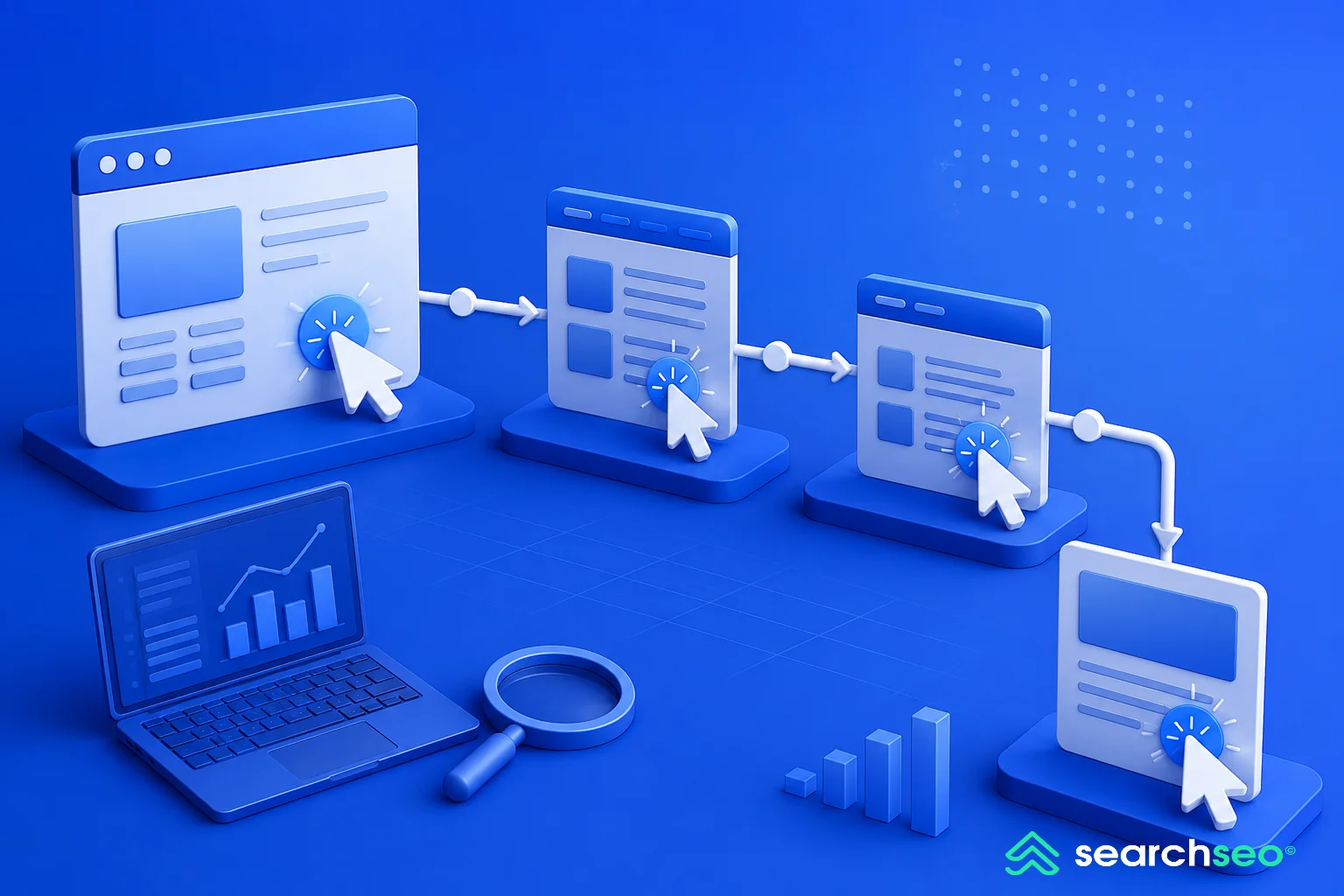

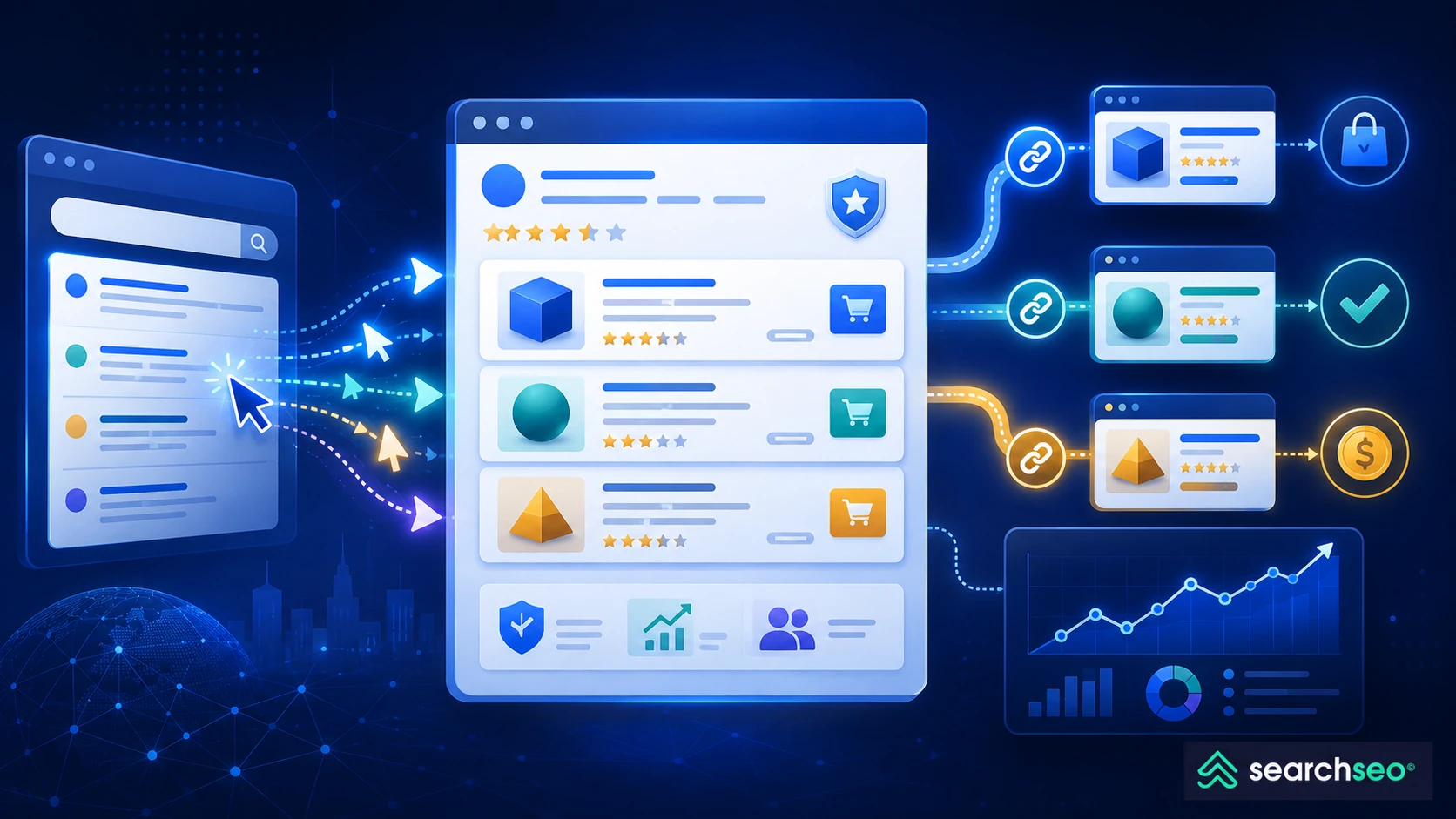
For years, SEO advice obsessed over one metric: Volume. More sessions. More pageviews. Bigger graphs in Google Analytics.
In 2026, that mindset is obsolete. Google doesn’t care how many people visit your site.
What Google cares about is what users do after they click.
That is the distinction between "traffic" and "quality traffic." It is the reason why many sites with exploding visitor counts still fail to rank, while smaller, highly targeted sites dominate the SERPs.
Here is the breakdown of how Google defines quality traffic today, which signals actually move the needle, and how to align your strategy without risking penalties.
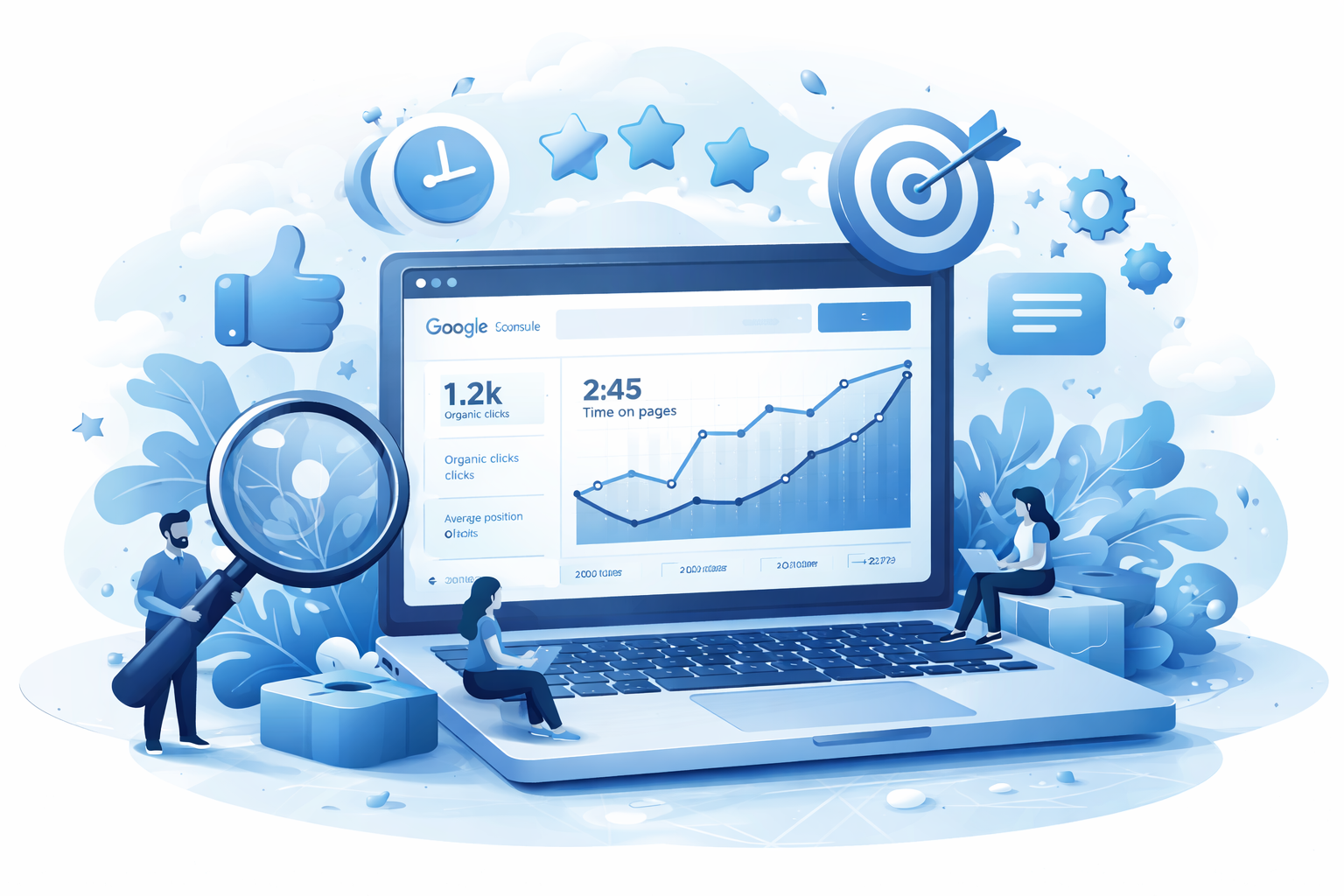
Quality traffic is a behavior, not a metric
Google doesn’t label traffic as “good” or “bad” in a dashboard. Instead, its algorithm evaluates aggregated user behavior at scale.
In simple terms, quality traffic follows a specific narrative arc:
- Intent: The user searches with a clear purpose.
- Selection: They choose your result organically over others.
- Consumption: They stay long enough to actually read or watch.
- Interaction: They scroll, click internal links, or convert.
- Satisfaction: They do not return to the search results to try another link.
Google reads this sequence as algorithmic confirmation that your page deserves its position. Low-quality traffic does the opposite.
The 4 signals Google uses to judge traffic quality
Google won’t publish a checklist, but years of patents, leaks, and algorithm analysis point to four specific signals that define quality in 2026.
1. Organic Click-Through Rate (CTR)
CTR remains one of the strongest initial quality indicators.
- If your page ranks but users ignore it, Google interprets this as a relevance problem.
- If users click your link, especially when competing results exist, that is a positive signal.
Why it matters in 2026: CTR is contextual. Google compares your result against your specific competitors on that specific SERP. Improving your CTR without changing your content is often the fastest lever to improve rankings. This is why premium website traffic tied to specific search intent is far more valuable than generic direct visits.
2. Post-click engagement (dwell time & depth)
Getting the click is only half the battle. Google relies heavily on what happens post-click. Key engagement patterns include:
- Time on Page: Are they reading the content?
- Scroll Depth: Did they reach the footer, or leave at the header?
- Secondary Page Views: Did they explore the site further?
A user who lands, scrolls, reads, and clicks an internal link sends a massive trust signal. A user who loads the page and leaves in two seconds sends a signal of low quality.
3. Pogo-sticking (the ranking killer)
Pogo-sticking occurs when a user:
- Clicks your result.
- Immediately hits "Back."
- Clicks a different result on the same search page.
Google treats this as dissatisfaction. In 2026, the algorithm is incredibly efficient at detecting instant returns and repeated back-and-forth behavior. High-quality traffic does not pogo-stick; it finds the answer and stays.
4. Query-to-content alignment
Google evaluates traffic in the context of the specific query.
- A visitor searching for “best CRM for small business” (Commercial Intent) behaves differently than someone searching for “what is a CRM” (Informational Intent).
If your traffic behavior doesn't match the intent layer of the keyword, engagement metrics collapse. Quality traffic matches keyword intent, content depth, and user expectations. That alignment is what separates useful niche website traffic from generic visits that inflate sessions without strengthening relevance.
What Google does NOT consider quality traffic
Let’s clear up the myths. In 2026, the following metrics are vanity, not quality:
- Raw session counts: 10,000 hits mean nothing if they bounce.
- Bot hits or crawler noise: Google filters this out immediately.
- Social media spikes: Viral traffic often has low intent and high bounce rates.
- Paid Ads traffic: Google keeps organic and paid signals separate.
A thousand irrelevant visits will never outperform ten highly aligned, engaged visitors. Modern SEO favors precision over scale.
Why “premium website traffic” exists as a category
Not all traffic sources are created equal. Cheap traffic focuses on volume. Premium traffic focuses on signals.
Premium website traffic is engineered to:
- Originate from search engines (organic referral).
- Reflect realistic click behavior (human-like CTR).
- Maintain natural engagement patterns (scrolling and dwell time).
This distinction is why services like SearchSEO exist, to provide traffic that aligns with how Google actually evaluates quality in 2026.
Deep Dive: You can learn more about the mechanics of this traffic type here:👉 Premium website traffic explained
Can quality traffic influence rankings?
The Short Answer: Yes, but it acts as a confirmation signal.
Google relies on hundreds of ranking factors, including content quality, backlinks, and technical SEO. Traffic does not replace those pillars, but quality traffic amplifies them.
When Google sees a page with strong content plus improving CTR and positive engagement, it gains "confidence" in that URL. It views the traffic as crowd-sourced proof that the ranking is correct.
Think of quality traffic as validation, not manipulation.
The safest way to improve traffic quality
Google penalizes aggressive patterns, not smart strategies. To improve traffic quality signals safely in 2026, your approach must be:
- Gradual: Traffic should grow naturally, not spike overnight.
- Intent-Matched: Visitors must target keywords relevant to your content.
- Human-Like: Dwell times and bounce rates must mimic real users.
Final takeaway
In 2026, Google doesn’t reward sites for being loud. It rewards sites for being chosen.
Quality traffic proves to Google that users want your result, engage with your content, and don't regret clicking. If your traffic reinforces those signals, it works with the algorithm, not against it.
And if you want to understand how premium traffic fits into a modern SEO strategy, start here: Premium website traffic


.svg)