

.svg)

.svg)
%201.png)


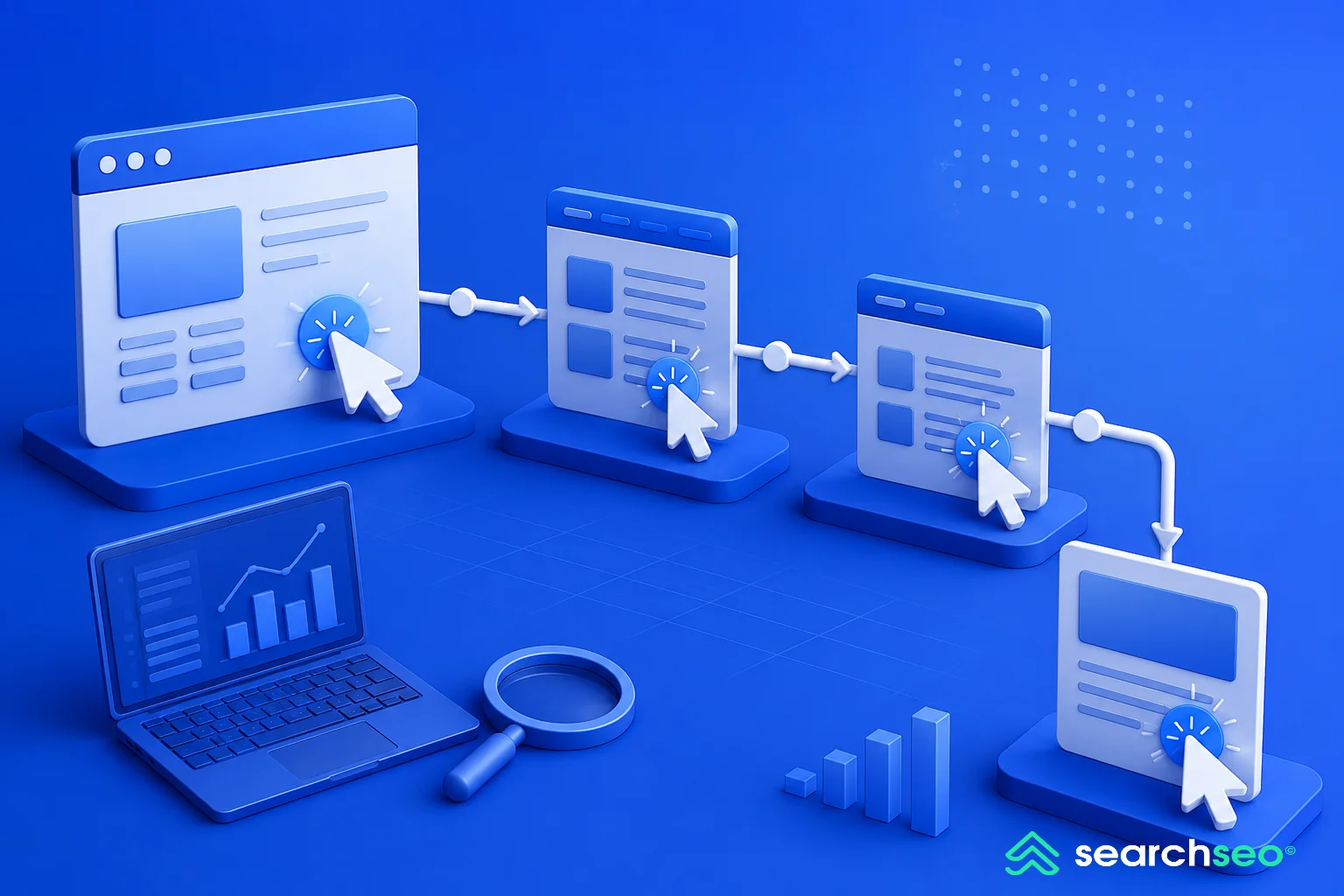


Most sites treat internal linking like housekeeping: Add a few links, clean up orphan pages, and move on.
That mindset is exactly why most internal linking strategies stall. High-performing sites don’t just "add links." They design internal linking systems.
These systems quietly drive rankings, improve crawl efficiency, and create compounding organic growth. If you’re serious about SEO visibility, internal linking isn’t a checklist item, it is infrastructure.
Let’s break down what that actually means and how to build it.
Why internal linking breaks at scale
Every major SEO guide agrees that internal links matter. Yoast, Semrush, and Moz all explain the why. The real problem is that most advice stops before the execution gets difficult.
Here is where internal linking usually fails:
- Ad-hoc execution: Links are added page-by-page, not system-wide.
- Random authority flow: Link equity flows randomly rather than intentionally toward money pages.
- Orphaned launches: New content launches without structural support from older, high-authority pages.
- Cannibalization: High-value pages compete against one another instead of reinforcing each other.
The result is a site that grows in content volume but not in rankings. Internal linking only becomes powerful when it is predictable, repeatable, and aligned with search intent. That is when it turns into a growth system.
What an internal linking growth system actually is
A growth system answers one fundamental question:
As we publish more content, does our site get stronger or just bigger?
A true internal linking system does four things consistently:
- Concentrates authority on the pages that drive revenue.
- Creates clear topical hierarchies for search engines.
- Accelerates indexation and re-crawling of deep content.
- Guides users and bots through intent-based paths.
If your links don’t do all four, they are merely decorative.
Start with link intent, not link count
Most internal linking audits focus on vanity metrics: links per page, orphaned URLs, or crawl depth. These are useful, but incomplete. Instead, you need to think in link intent layers.
1. Structural links (the foundation)
These define how your site works. Examples include your navigation, breadcrumbs, category pages, and topic hubs.
- The Goal: Discovery and hierarchy.
- The Reality: If Google doesn’t understand your taxonomy, no amount of contextual links will save you.
2. Contextual links (authority transfer)
This is where rankings move. These links sit inside body content, use descriptive anchor text, and connect semantically related pages.
- The Goal: Strategic authority flow.
- The Reality: Internal PageRank flows toward where you point it. Your system must decide where authority accumulates; do not leave this to chance.
3. Momentum links (growth accelerators)
These are often overlooked. Momentum links are added to newly published or refreshed content, pointing back toward the "money pages" you want to push immediately.
- The Goal: Freshness signals.
- The Reality: This is where internal linking stops being passive and becomes a proactive ranking factor.
Build internal links around "topic gravity"
Forget generic "related posts." Think in terms of topic gravity.
Every topic cluster should have:
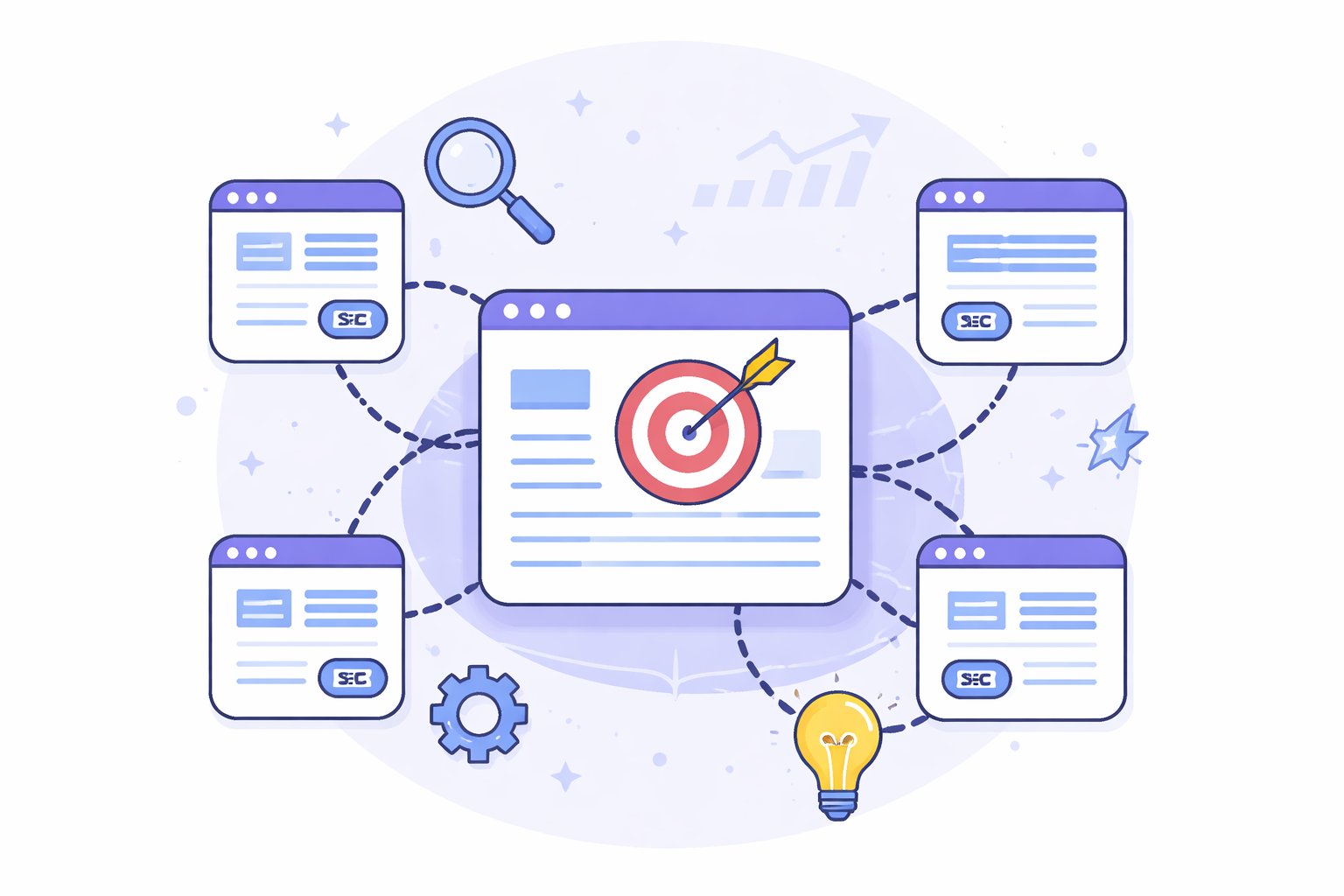
- One gravitational center: The pillar page you want to rank for the highest volume term.
- Supporting pages: Long-tail content that feeds authority inward to the center.
- Lateral links: Connections between supporting pages that reinforce topical depth.
If two pages target similar keywords, they shouldn’t compete—they should collaborate. Ask yourself:
- Which page must win this keyword?
- Which pages exist solely to support it?
Link accordingly.
Internal linking is a crawl and refresh engine
Internal links don’t just pass authority; they signal freshness. When you add new internal links to an older page, update anchors to reflect current intent, or link from a high-traffic URL to a stagnant one, you trigger specific bot behaviors.
You prompt search engines to:
- Re-crawl faster: Bots prioritize pages with changing link graphs.
- Re-evaluate rankings: New anchors provide new context.
- Reclassify relevance: You solidify the topical relationship between the two pages.
The User Signal Factor. This is especially powerful when paired with user engagement. If you place a link prominently and users actually click it, that "path" is validated.
Note: Links create the path. User behavior confirms it. If users ignore your internal links, Google likely will too.
The internal linking workflow that scales
Here’s a system SEO practitioners can actually run every month.
Step 1: Define priority URLs
Focus on revenue pages, high-intent content, or strategic rankings you are close to winning (e.g., positions 4–10).
- Limit this list. Focus beats coverage.
Step 2: Map supporting content
For each priority URL, identify 5–15 relevant supporting pages. Look for:
- Existing high-authority pages (check their backlinks).
- Pages that are currently being crawled frequently.
- Planned content on the editorial calendar.
Step 3: Deploy links in "Waves"
Instead of adding all links at once, add them gradually. Refresh anchor text periodically to match the nuances of search queries. This mirrors natural growth patterns.
Step 4: Reinforce with signals
Once links are live, monitor the crawl stats in Google Search Console. Are the priority pages being crawled more often? Is the ranking for the target keywords moving?
The goal isn't just a spike in traffic, it's momentum.
Common mistakes (even advanced SEOs make)
Let’s clear these out:
- Linking everything to everything: If every page links to every page, no page is important.
- Generic anchors: "Click here" or "Read more" tells Google nothing about the destination.
- Ignoring old content: Your archive is your biggest linking asset. Use it.
- Set and forget: Link graphs decay. They need maintenance.
Internal linking is compounding leverage
Backlinks are hard to earn. Content takes time to produce. Internal linking is different.
It is one of the few SEO levers you fully control, and it compounds when done right. When you treat internal links as a growth system, new content launches stronger, rankings stabilize faster, and authority flows exactly where it impacts revenue.
Want to pressure-test your internal linking strategy?
Audit your site and ask one question:
If we published 50 new pages this year, would our best pages get stronger, or would they get buried?
If the answer isn’t obvious, that’s your opportunity. Build the system first. Then let the content do the work.


.svg)