

.svg)

.svg)
%201.png)


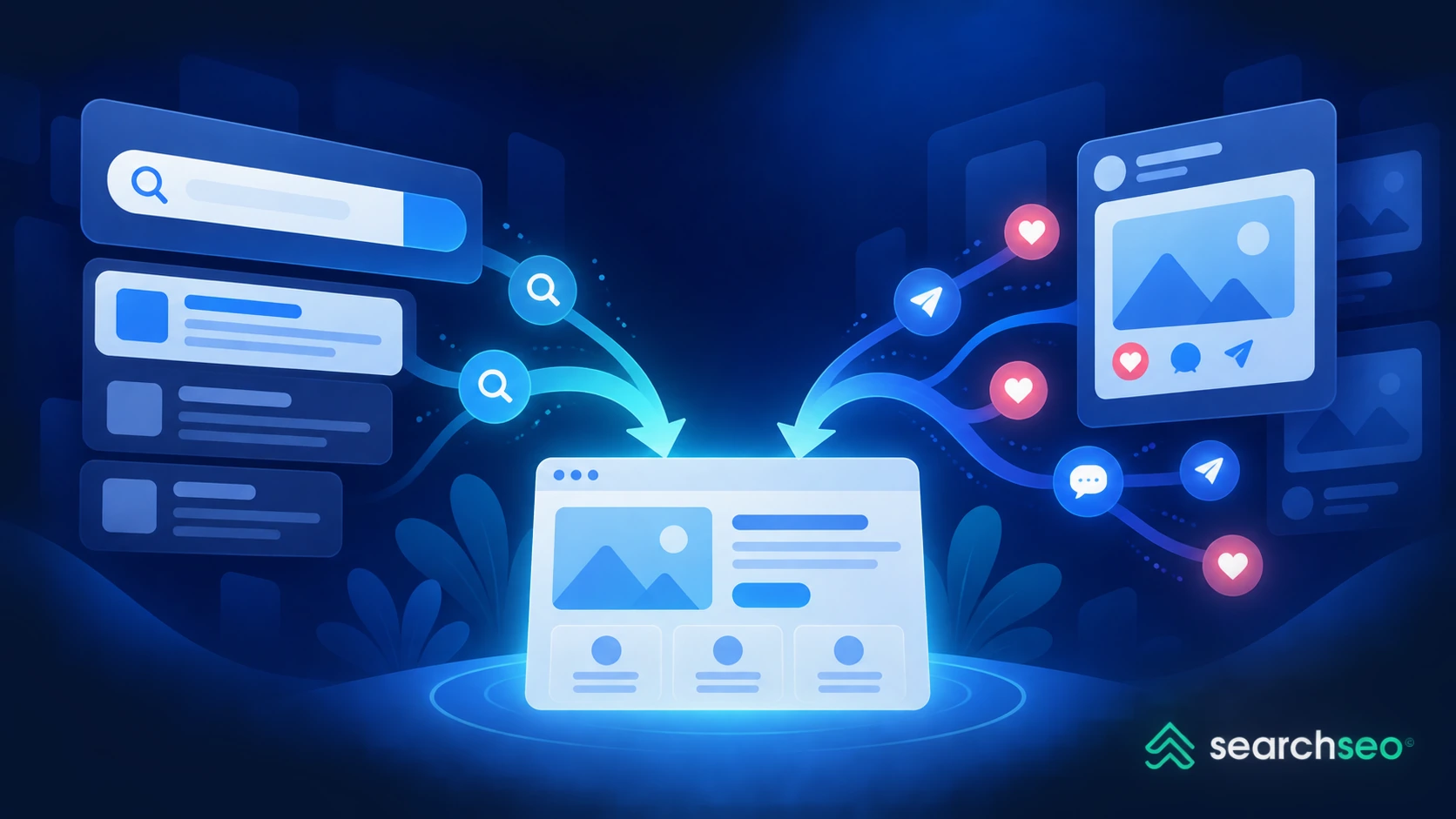

Every year, marketing teams pour billions into social and display advertising: beautiful banner ads, algorithmically targeted posts, video pre-rolls that users skip in three seconds. And every year, the same quiet fact reasserts itself. None of it quite matches the quality of a visitor who typed a question into a search bar and found you.
The reason is deceptively simple. Search traffic arrives with intent already formed.
Social media users are browsing, scrolling, half-watching. Display audiences are doing something else entirely when an ad interrupts them. But the search visitor raised their hand. They articulated a need in plain language and went looking for a solution.
That single difference, the presence of declared intent, cascades into every downstream metric that actually matters to a business.
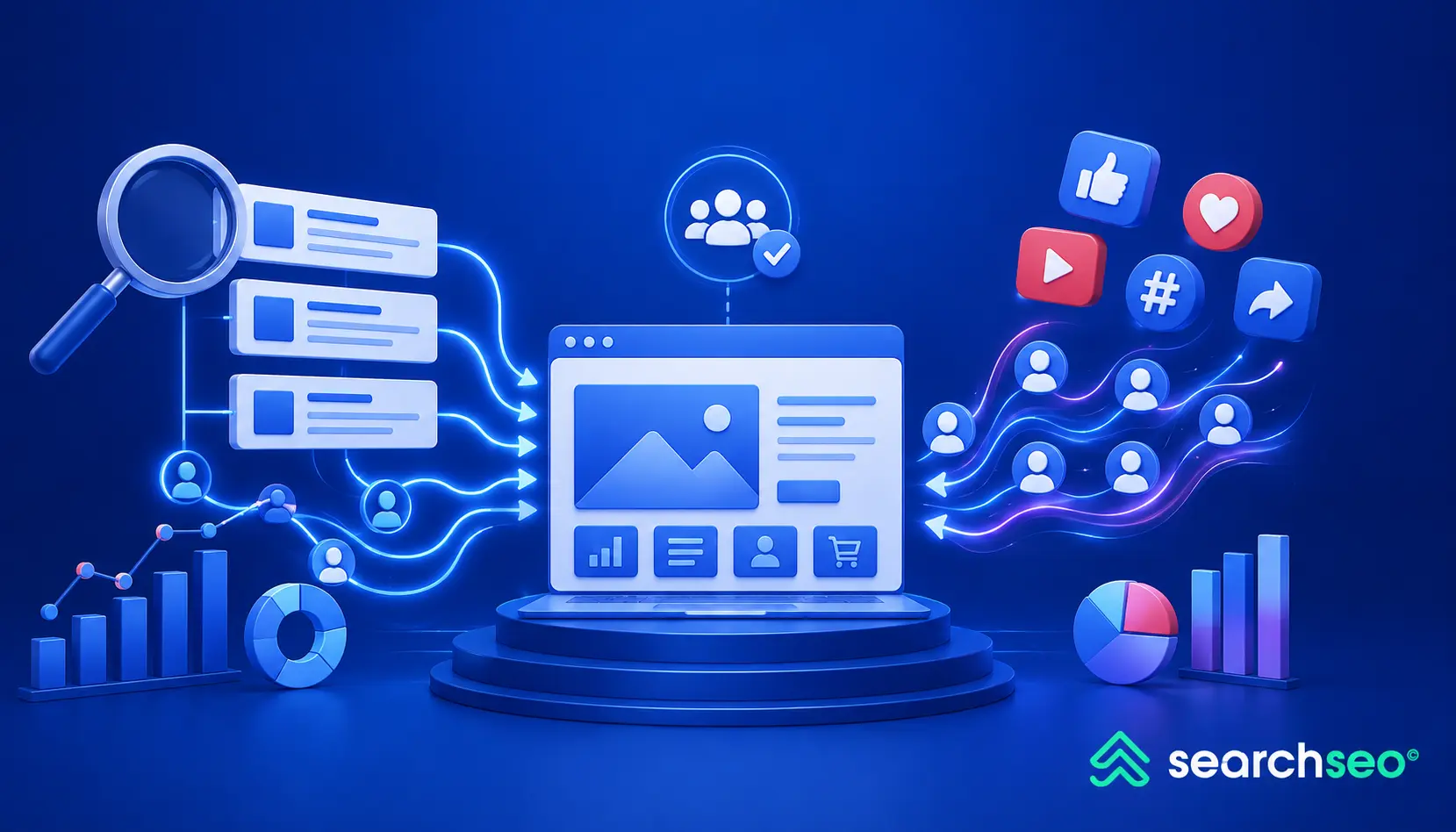
The intent gap in search-based web traffic
Consider what happens at the moment of a search query. A user types “best project management software for remote teams” and clicks your result. They have already done substantial cognitive work. They have identified a problem, formed a question, and chosen to investigate. Your job at that moment is simply not to disappoint them.
Social and display visitors require you to do all of that work on their behalf, and to do it in the span of a banner or a split second of feed time. You must create problem awareness, manufacture desire, and engineer the click.
Even when it works, the resulting visitor is in a fundamentally different psychological state than the search visitor. They are curious at best and skeptical at worst.
Organic search traffic converts, on average, at rates five to eight times higher than display advertising for comparable commercial queries. This is not because the content is better, but because the visitor's mindset already aligns with a commercial outcome.
Why search-based traffic compounds over time
Here is another dimension that marketing presentations rarely chart honestly: the decay curve.
A display campaign ends the moment the budget does. A social post’s half-life is measured in hours, sometimes minutes. The content you spent three days producing for Instagram is effectively invisible by Wednesday.
A well-optimized page in search, by contrast, compounds. It earns links over time, accumulates authority, and can generate qualified traffic from organic search for years without additional spend.
The initial cost of producing high-quality content is front-loaded. The returns are not. This is why, when you model customer acquisition cost over a 24 or 36 month window, search-based website traffic almost always wins, often dramatically.
Platform dependency and the risk of paid traffic
There is a structural vulnerability in social and display strategies that rarely makes it into the pitch deck. You do not own the audience, and you do not control the rules.
Every significant Facebook algorithm update, every iOS privacy change, every CPM spike during an election cycle. These are external forces that can halve your return on ad spend overnight. Companies that built their entire acquisition model on a single paid social channel have learned this lesson expensively.
Search-based web traffic is not immune to change. Google’s algorithm evolves constantly. However, the underlying contract is more stable. Produce content that genuinely answers what people are looking for, earn credibility through links and engagement, and the system rewards you over time.
The optimization principles have remained broadly consistent for more than a decade.
Five reasons search-based website traffic wins
1. Declared intent converts
A user who searches for your product category has already self-selected. No amount of targeting sophistication in display replicates the signal of an explicit query.
2. Search-based traffic compounds in value
A strong article earns links, climbs rankings, and generates traffic from organic search for years. Its cost per acquisition falls with every passing month. This is the inverse of paid media.
3. Trust is built into organic search
Appearing organically in search carries an implicit third-party endorsement. Paid banner ads carry the opposite signal. Users know someone paid to interrupt them.
4. Audience ownership
Traffic that lands on your site can be converted into email subscribers, retargeting pools, and direct relationships. Social followers live on rented land.
5. Lower platform risk
Algorithm changes affect everyone in search. In social and display, advertisers are at the mercy of private companies whose commercial interests may conflict with yours.
The role of search-based web traffic in a balanced marketing strategy
A complete marketing strategy is rarely a monoculture.
Social media serves real functions: brand awareness, community building, cultural relevance, and rapid reach at the top of the funnel. Display retargeting, when used surgically on visitors already in your ecosystem, can accelerate close rates.
These channels have their place.
But the hierarchy matters. When budgets compress, as they always eventually do, search-based traffic should be the last channel cut, not the first. When teams must choose where to invest in the creation of lasting assets, the answer is almost always content that earns search visibility.
When CFOs ask which channel reliably produces the lowest long-run customer acquisition cost, the answer remains the same across industry after industry.
How to start building
If your current strategy over-indexes on paid social and display, the rebalancing does not require an overnight shift.
Start by auditing which pages on your site currently rank for commercial queries, however weak. Identify the gaps between what your customers search for and what you actually publish. Commission content that closes those gaps with genuine depth and utility.
The compounding effect takes time to activate. It typically takes six to twelve months before meaningful traffic from organic search materializes from new content. This is precisely why starting now matters more than starting perfectly.
Every month of delay is a month of compounding forgone.
The best time to invest in search was three years ago. The second best time is today.


.svg)