

.svg)

.svg)
%201.png)




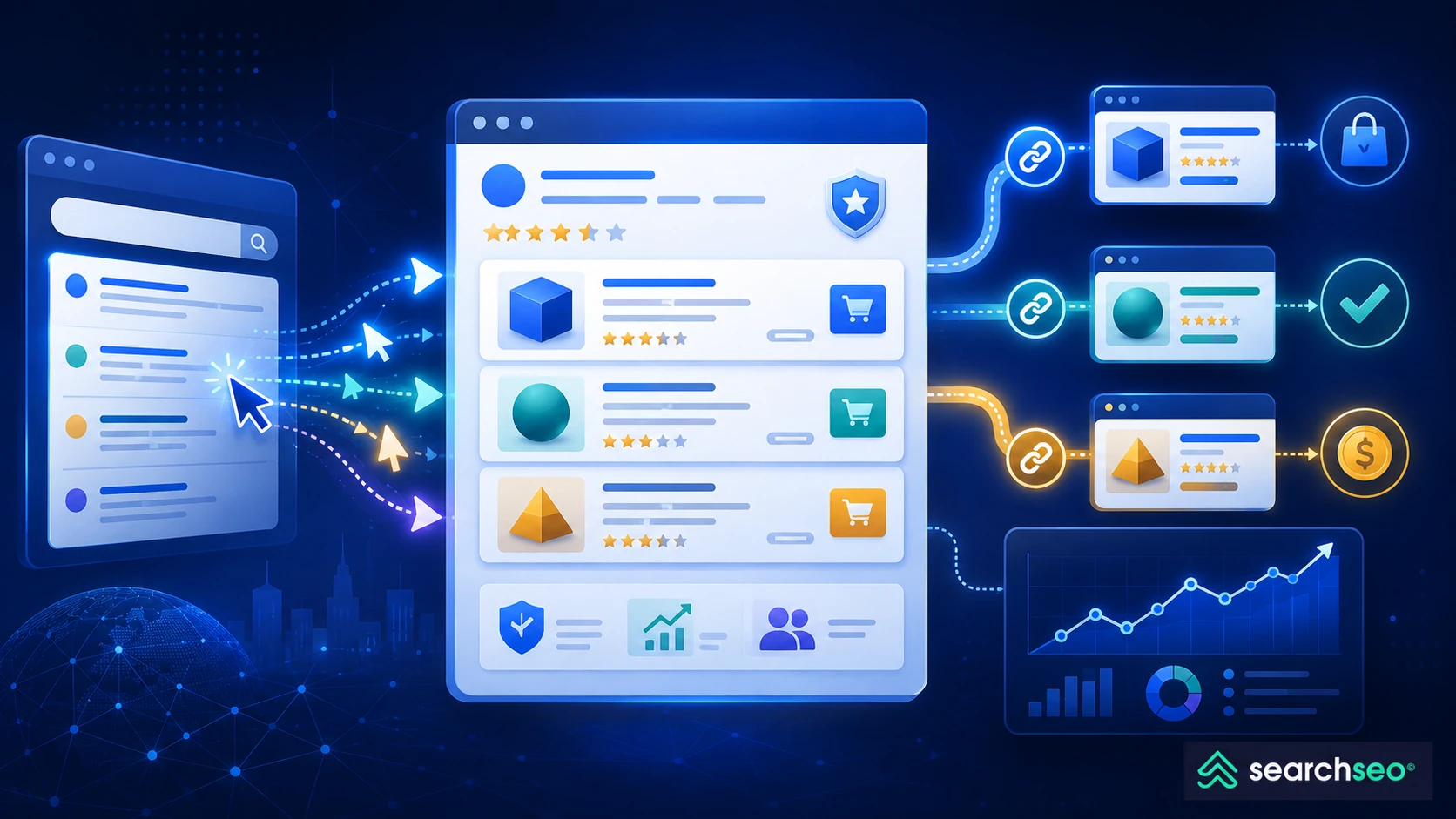
CTR bot software gets talked about constantly. Most of that conversation is noise, vendor promises, and feature lists that have nothing to do with SEO results.
If you are trying to improve organic performance, the real question is practical: which features actually help you reinforce qualified engagement signals without polluting your analytics or creating algorithmic risk?
This guide cuts through the clutter. Every feature below is evaluated on one standard: does it help search engines see behavior that looks and behaves like real users? If a feature does not serve that goal, it does not make the list.

Why CTR bot software even exists
Search engines do not rank pages in a vacuum. Engagement data, including how users click on results, how long they stay, and whether they return to the SERP, feeds into how algorithms interpret the quality and relevance of a page for a given keyword.
CTR bot tool exists to simulate this behavior at scale. When configured correctly, it sends behavioral signals that tell search engines your listing is earning clicks and holding attention for the keywords you are targeting.
When configured poorly, it produces obvious patterns: flat traffic spikes, uniform session lengths, and datacenter IPs that stick out the moment you open Google Analytics. That kind of output works against you, not for you.
That is why the features a tool offers matter far more than the claims on its homepage.
The 7 features that separate good CTR bot software from bad
Feature #1: Real search behavior, not raw click volume
Clicks alone are a hollow metric. A genuine search session involves a sequence of actions: querying a keyword, scanning the results page, selecting a listing based on position, spending time on the page, and navigating internally. Good CTR bot software replicates all of that, not just the click event.
Look for software that simulates:
- Natural keyword entry into the search engine
- Scrolling and dwell time on the SERP before clicking
- Position-aware click selection (mimicking how real users scan results)
- Realistic on-page time relative to content length
- Internal page navigation after landing
If a tool leads with raw click volume as its primary selling point, that is a signal to look elsewhere. Volume without behavioral context produces junk data, not ranking signals.
Feature #2: Residential IPs and real browser environments
This is non negotiable. High quality CTR bot software uses:
- Residential IP addresses
- Real desktop browsers
- Normal user agents
Datacenter IPs and headless browsers are a red flag. They create traffic that looks fake the moment you open analytics.
If the traffic does not blend in with organic sessions, it works against you.
Feature #3: Keyword-level control and volume assignment
Not every keyword on your site deserves the same treatment. A page ranking solidly at position 4 needs different reinforcement than one fluctuating between positions 8 and 12. Good CTR software lets you work at the keyword level, not just the domain level.
Look for software that lets you:
- Assign traffic per keyword
- Adjust volume gradually
- Pause or swap keywords easily
Keyword-level control keeps your CTR activity proportional to the opportunity. Flooding a keyword that is already competitive, or sending identical volume to every term regardless of search volume, creates patterns that look unnatural in aggregate.
Feature #4: Geo-targeting aligned with your actual audience
Search behavior is geographically specific. A user in Chicago and a user in London interact with search results differently, click on different listings, and expect different results for the same query. If your target audience is concentrated in a specific region, your CTR signals should reflect that.
Strong CTR bot software offers geo-targeted traffic options including country-level selection, region or state-level targeting where relevant, and the ability to match the search engine variant to the target geography. This keeps engagement signals consistent with the audience profile that actually matters for your rankings.
Feature #5: Pacing controls and daily distribution
Real organic traffic does not arrive in flat, uniform blocks. It fluctuates by time of day, day of week, and seasonal factors. CTR activity that ignores this looks artificial by comparison.
Look for tools that include:
- Day-of-week distribution that mirrors natural search patterns
- Gradual volume ramp-ups over the first days or weeks of a CTR bot campaign
- Automatic throttling to prevent sudden, unexplained traffic spikes
Consistent, variable pacing protects long-term campaigns. Tools that deliver clicks in flat daily batches are building a pattern that diverges from how organic traffic actually behaves over time.
Feature #6: Transparent, verifiable reporting
If you cannot verify what a tool is doing, you are running a campaign blind. The best CTR bot software gives you enough reporting detail to cross-reference activity against Google Search Console and your analytics platform without guessing.
Minimum reporting requirements:
- Delivered clicks broken down by keyword
- Activity timeline with session-level distribution
- Project-level status that shows active, paused, and completed campaigns
- Clear visibility into pacing and volume against targets
Reporting is not just a convenience feature. It is how you confirm the tool is working, identify when settings need adjustment, and demonstrate results to stakeholders.
Feature #7: Safety guardrails and volume caps
CTR is a supporting ranking signal, not a primary lever. Treating it as one, by running aggressive volume relative to a keyword's actual search demand, is the fastest way to generate visible anomalies rather than ranking improvements.
Look for built-in safety controls including:
- Click caps proportional to estimated keyword search volume
- Alerts or warnings when settings push into aggressive territory
- Easy pause and stop controls that take effect quickly
A tool without guardrails puts the responsibility entirely on the user to stay within safe parameters. Good software builds those parameters into the product.
Feature comparison: what to look for vs what to skip
Use this as a quick reference when evaluating CTR bot tools. Every item in the "look for" column directly supports realistic behavioral signals. Items in the "skip" column are either cosmetic or frequently oversold.
Features that matter less than people think
Some options show up in CTR software marketing that get attention but rarely affect outcomes in practice.
The reason these features underperform is the same in each case: they are either cosmetic, disconnected from how search engines evaluate behavioral signals, or they target granularity that does not correspond to any meaningful ranking factor difference. Focus your evaluation on realism, control, and consistency instead.
How CTR bot software fits into a real SEO strategy
CTR activity does not rank pages on its own. A page with thin content, weak backlinks, or poor technical health will not see sustained ranking improvement from CTR signals alone. Search engines evaluate multiple factors, and CTR is one supporting input among many.
CTR bot software performs best when it is reinforcing pages that already have solid fundamentals: content that matches search intent, technical SEO that allows proper indexing, and at least some authoritative backlinks pointing to the page or domain. When those conditions exist, improving CTR signals on targeted keywords can accelerate movement from positions 5 to 8 up into the top 3, where click distribution is significantly more valuable.
How to use CTR signals effectively
Target keywords where you already rank on page one. CTR reinforcement has the clearest impact when the gap between your current position and a higher-value position is what is holding back traffic, not content quality or domain authority. Review the best traffic bots available against these criteria before committing to a platform.
Choosing CTR bot software for lead-driven SEO
If your primary goal is attracting qualified organic leads rather than raw traffic volume, the feature priorities shift slightly. You need tools that generate engagement signals tied to specific, high-intent keywords. Mass traffic generation across broad terms does not serve that goal.
Prioritize software that gives you keyword-level control so you can concentrate CTR activity on the terms that carry commercial intent. Pair that with realistic session simulation so the engagement looks credible, and transparent reporting so you can evaluate which keywords are responding.
Avoid any tool that sells on volume guarantees or promises specific ranking jumps within fixed timeframes. CTR signals operate over weeks, not days, and their effect is visible in SERP position trends and Search Console CTR data, not in overnight ranking jumps.
Final takeaway
CTR bot software is not a trick. When built correctly, it is a precision instrument for reinforcing the behavioral signals that search engines use to evaluate how well a page serves a query.
The features that matter all serve the same goal: making engagement look and behave like what real users produce. Residential IPs, full search session simulation, keyword-level controls, pacing, and verifiable reporting are what separate tools that move rankings from tools that produce analytics noise.
Get those fundamentals right, and CTR becomes a meaningful supporting signal in your broader SEO stack. Get them wrong, and you are paying for junk data.


.svg)