

.svg)

.svg)
%201.png)


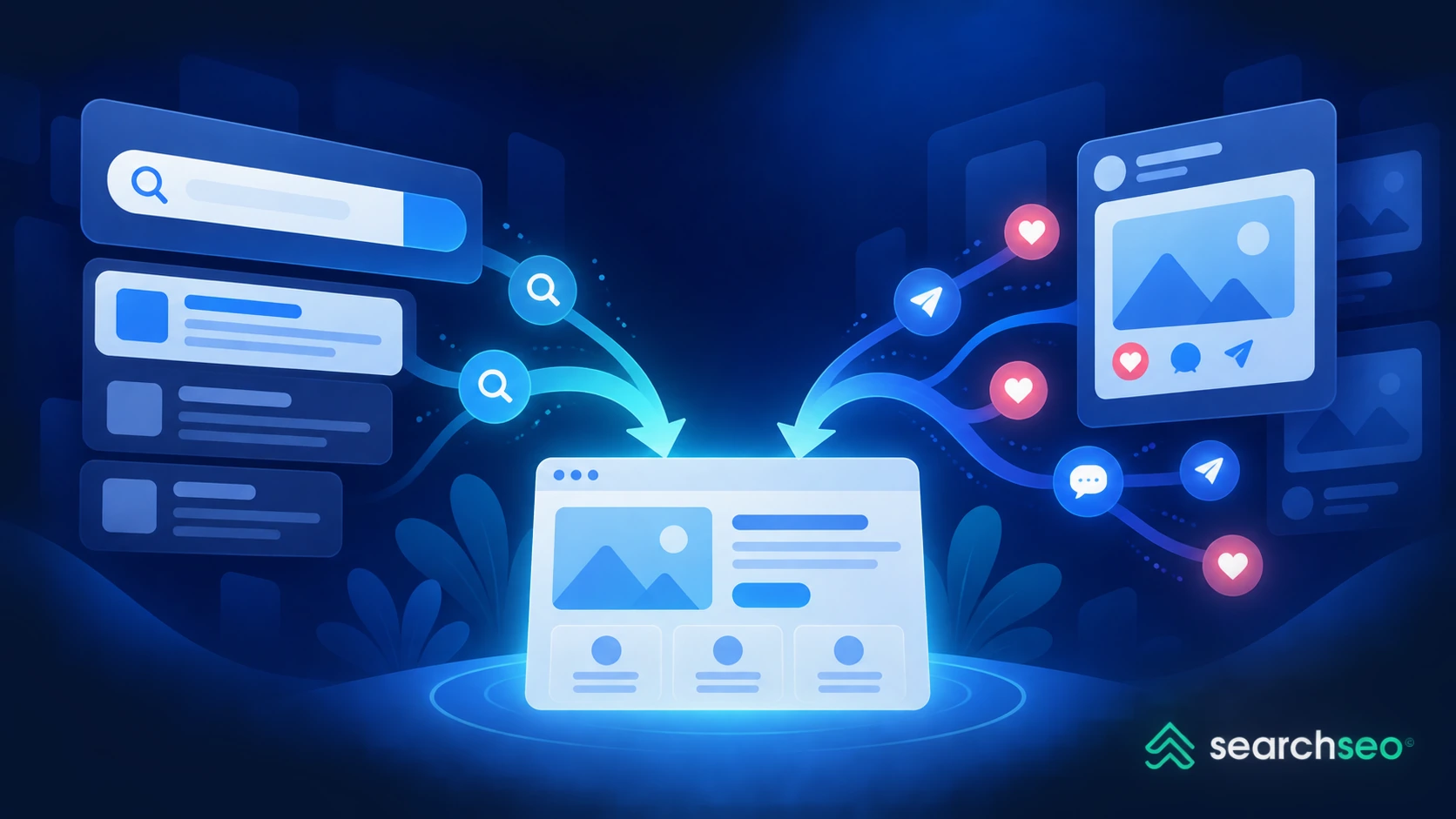

You check Google Search Console and your impressions are up. Your rankings are holding. And yet, traffic is down. Sound familiar?
You're not imagining it, and your site isn't broken. What you're running into is zero-click search: the growing pattern where Google answers the user's question directly inside the search results page, and the user never clicks through to anyone's website, including yours.
In 2024, 58.5% of all U.S. Google searches ended without a single click to the open web. That figure has continued climbing into 2026. For every 1,000 searches run in the U.S., only around 360 clicks reach an external website. The rest stay on Google.
This article explains what's driving that trend, which of your pages are most exposed, and, most importantly, seven specific strategies you can use to protect your organic CTR even as Google keeps expanding the features that keep users from ever clicking through.
What are zero-click searches?
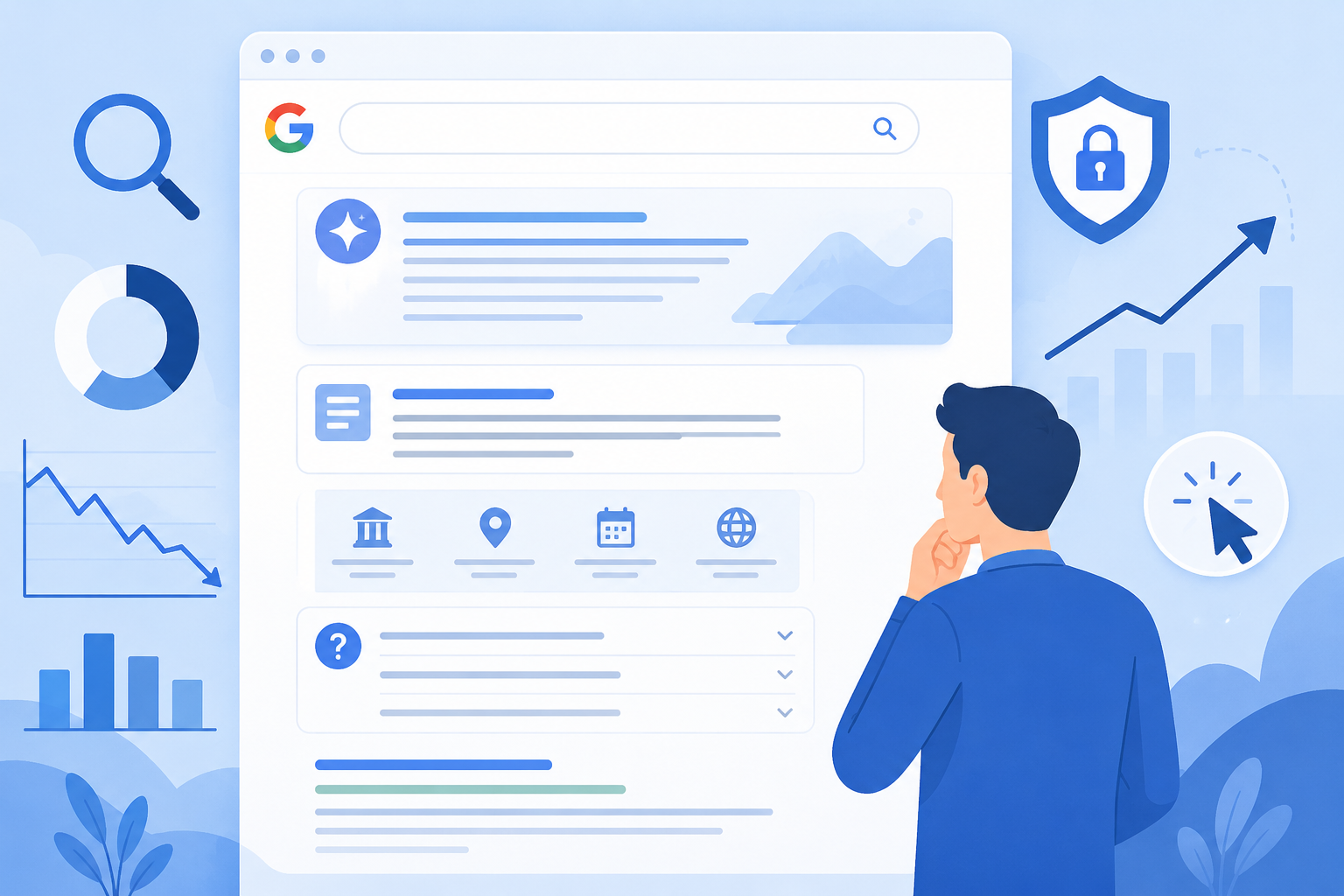
A zero-click search is any Google query that ends without the user clicking a link to an external website. The user searched, saw the SERP, got what they needed, and left without a single website receiving a visit.
Zero-click searches aren't new. Google has served direct answers for years through featured snippets, Knowledge Panels, and instant calculator results. But the scale and speed of growth has changed dramatically since the rollout of AI Overviews in 2024.
The SERP features driving zero-click behavior
Four features account for most zero-click outcomes in 2026:
AI Overviews. Google's AI-generated summaries now appear on over 13% of all U.S. desktop queries, and that number is growing. Searches triggering AI Overviews show an average zero-click rate of 83%, meaning 8 out of every 10 users who see an AI Overview never click anything below it. Informational queries, the content type most SEO blogs are built on, account for 88.1% of AI Overview triggers.
Featured snippets. Position Zero answers pull the user's attention before any organic results. For queries with a featured snippet, average CTR on the organic results below it drops significantly. Winning the snippet sounds like a win, but for many query types, it hands Google your content while reducing your own click share.
Knowledge Panels and Knowledge Cards. Factual queries like "what's the capital of X," "when was Y founded," and "what's the distance between A and B" are almost entirely absorbed by Knowledge Panels. No one clicks through for these.
People Also Ask. PAA boxes expand on the page, giving users follow-up answers without triggering navigation to any external site.
The data: how much organic CTR has actually declined
Sources: SparkToro 2024 Zero-Click Study, Similarweb 2025, Search Engine Land, Semrush AI Overview Impact Report 2025.
What these numbers mean in practice: you can rank in positions 1–3 for a high-volume informational query and receive a fraction of the traffic that position would have delivered four years ago. The rank is real. The traffic gap is also real.
Which pages are most at risk?
Not all pages are equally exposed. Understanding the risk profile of your content is the first step toward a targeted response.
How search intent determines your zero-click exposure
7 strategies to protect your organic CTR in a zero-click world
1. Optimize your title tag and meta description for the click, not just the rank
When an AI Overview or featured snippet appears above your organic result, your listing moves down the visible SERP. Users who scroll past the AI-generated block are already showing intent to find more, but they'll only click your result if the title and description give them a strong reason to.
Generic title tags that simply describe the page topic ("What Is Bounce Rate | SearchSEO Blog") perform poorly in this environment. Titles that create specific curiosity or promise a unique angle pull clicks even from a lower SERP position. Use numbers, specificity, and strong verbs. Your CTR optimization process should start at the SERP listing level. That's your first and sometimes only chance to earn the click.
2. Target queries where intent demands the full page
Google's AI Overviews are designed to handle the query, not the conversation. They struggle to satisfy queries that require nuance, comparison, original data, personal recommendation, or step-by-step guided decision-making.
Shift content strategy toward:
- Comparison queries ("SearchSEO vs. SerpClix: which is better for CTR campaigns")
- Commercial investigation ("best tool for X with feature Y")
- Queries that require an outcome the user controls ("how to set up a CTR campaign for a local business")
- Original research and data ("2026 CTR benchmark study by industry")
Understanding what is CTR and how click-through rate works gives you the foundation to evaluate whether any given content type will actually earn clicks in the current SERP environment, or simply feed Google's answer engine.
3. Use structured data to win enhanced SERP listings
Rich results (star ratings, FAQ dropdowns, sitelinks, breadcrumbs, video thumbnails) increase the physical size of your SERP listing and pull attention toward it even when an AI Overview sits above it. Schema markup doesn't prevent zero-click outcomes, but it improves your click share among users who do scroll down.
Priority schema types for CTR improvement:
- FAQ schema: expands your listing with 2–3 questions inline
- Review / AggregateRating schema: adds star ratings visible in the SERP
- HowTo schema: enables step previews in SERP snippets
- Breadcrumb schema: shows cleaner, more trustworthy URL paths
4. Build and protect navigational traffic
Zero-click almost never claims navigational queries. When a user searches "[brand name] + product/login/pricing," they already know where they want to go. Google can't intercept that intent with a generated answer. Brand-specific traffic holds up even as zero-click takes an increasingly large share of generic informational queries.
Invest in brand search volume deliberately: podcast appearances, PR, social presence, and email newsletters all drive branded searches that then convert at high rates because the user already has intent. That traffic is structurally protected from zero-click erosion.
5. Create content that answers the follow-up question
If Google's AI Overview handles question A, rank for question B. Users who read the AI summary for "what is CTR" and still want more will type the next logical question: "how do I improve my CTR" or "what's a good CTR for position 3." Chain-of-search content strategy means you're not competing with the AI Overview on its own terms. You're waiting one step downstream where it can't follow.
Map your content to the second and third questions in the user's research journey, not just the entry-point definition query. Look at the "People Also Ask" boxes and "Searches related to" sections for your target queries. These are Google showing you exactly where the follow-up traffic goes.
6. Strengthen CTR signals on pages that still appear in the SERP
Here is the strategic reality of the zero-click era: every click is more valuable than it used to be, because there are fewer of them per 1,000 searches. If your page appears in the SERP, even below an AI Overview, the click signal it generates carries more weight in Google's ranking model than it did before.
That means actively strengthening click-through behavior on your high-impression pages is one of the highest-ROI actions you can take right now. SERP click distribution data shows that click share is increasingly concentrated at position 1, which means the pages that do earn clicks send significantly stronger behavioral signals than they used to.
This is where CTR manipulation through controlled traffic campaigns becomes directly relevant. When organic clicks are being suppressed by SERP features, using SearchSEO to deliver quality click signals to your target pages protects and strengthens their rankings. You're not fighting the AI Overview. You're reinforcing Google's confidence in the pages that still have a legitimate claim to the SERP. The less organic traffic naturally flows to your rankings, the more important it is to ensure those rankings are supported by strong behavioral signals.
7. Monitor and iterate using GSC click data monthly
Zero-click patterns shift as Google adds and adjusts SERP features. A query that triggered a featured snippet in January may trigger an AI Overview in April. A page that held 4% CTR in Q1 may drop to 1.8% in Q2 as Google's AI coverage expands into that topic area.
Set a monthly GSC review cadence specifically for CTR by page and by query. Track:
- Impressions vs. clicks ratio (the gap widening = new SERP feature impact)
- Average position vs. CTR correlation (position stable but CTR declining = SERP layout change)
- Mobile vs. desktop CTR split (mobile is significantly more zero-click-prone)
Monitor your SEO visibility across these dimensions, not just ranking position alone. Visibility without clicks is increasingly common, and treating them as the same metric will give you a falsely optimistic read on your organic performance.
What zero-click growth means for your SEO strategy overall
Zero-click is not the end of SEO. It is a structural change in how clicks are distributed, and it has two effects that pull in opposite directions.
On the negative side: informational content generates fewer clicks per impression than it used to. TOFU content that once reliably drove traffic to your site now feeds Google's answer engine and keeps users on the SERP.
On the positive side: every click that does reach the open web is now more valuable. The user chose to click through despite the AI Overview, and Google's ranking algorithm uses that click as a behavioral signal that the page satisfied intent in a way the generated answer didn't. High-quality content with strong CTR on competitive, feature-heavy SERPs is increasingly rare and increasingly rewarded.
The SEOs who will hold and grow rankings in this environment are the ones who:
- Shift content strategy toward queries where click-through is structurally protected
- Optimize every SERP listing element for click performance, not just for crawlability
- Actively manage behavioral signals, including CTR, on their most important pages
- Monitor the gap between impressions and clicks as the core KPI, not rankings alone
The clicks that remain are worth fighting for. The question is whether you're fighting for them deliberately or hoping they'll hold on their own.
Conclusion
Zero-click searches have passed the tipping point. In 2026, more than half of all Google searches end before any website receives a visit, and the figure keeps climbing as AI Overviews expand across more query types.
The right response isn't to abandon SEO. It's to understand which pages are most exposed, engineer your content around query types where clicks are structurally protected, optimize every SERP listing element that influences click behavior, and where it counts most, reinforce the behavioral signals on your highest-value rankings.
That last point is where SearchSEO operates. When zero-click suppresses the natural flow of organic clicks to your pages, a controlled CTR campaign ensures your rankings stay supported by the behavioral signals Google uses to validate them. Creating helpful content that earns clicks is half the job. Making sure those pages generate the click signals that protect their positions is the other half.
If your impressions are rising while your traffic isn't, you already know the problem. The question is how aggressively you respond to it.
→ See how SearchSEO's CTR campaigns can strengthen click signals on your most important pages.


.svg)