

.svg)

.svg)
%201.png)





SEO advice often treats startups and scale-ups like the same company at different revenue levels. That’s a mistake.
The truth? SEO for startups and SEO for scale-ups are two different games. They have different risks, different priorities, and different ways to win.
- If you apply early-stage SEO tactics after you’ve hit product-market fit, you’ll plateau.
- If you run enterprise-style SEO too early, you’ll burn time and cash.
Let’s break down what really changes and how to adjust your strategy at each stage.
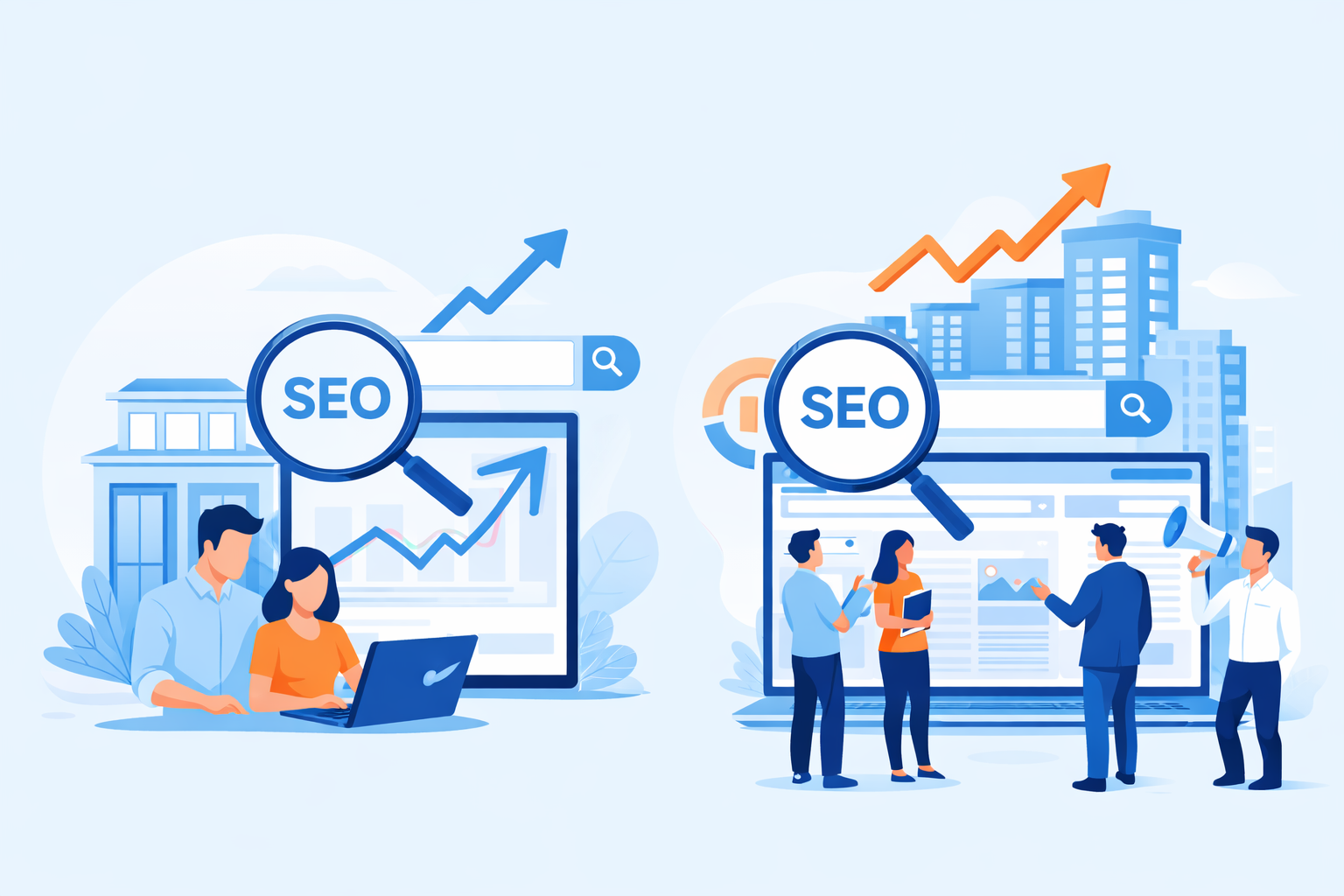
The core difference: survival vs. momentum
At a high level, the distinction is simple:
- Startup SEO is about proof.
- Scale-up SEO is about leverage.
You are playing in the same channel, but with a totally different mindset.
SEO for startups: earn your first wins fast
When you are a startup, SEO isn’t about world domination. It’s about survival, learning, and finding a pulse.
1. Narrow keyword intent (not volume)
Early on, you don’t have the "Domain Authority" to bully your way to the top of broad search terms. Competing on high-volume keywords is a losing battle.
Instead, focus on:
- Long-tail, problem-aware searches.
- Bottom-of-funnel intent.
- Keywords your ICP actually types.
Note: If a keyword converts customers but only gets 50 searches a month, that is a massive win for a startup.
2. Speed over perfection
Startups need feedback loops, not perfect content. Waiting six weeks to publish a "perfect" guide is six weeks too long.
If you’re an HR company publishing a guide about asynchronous video interviews, it doesn’t need to be flawless on day one. Get the core ideas live, see how recruiters engage with it, then refine the examples, templates and data over time.
- Ship content quickly.
- Update based on real performance data.
- Kill pages that don’t move the needle.
3. Single-page validation
One page that ranks and converts beats ten pages that don't. You are testing signals, not scaling yet. Ask yourself:
- Can this page rank at all?
- Does organic traffic convert?
- Are users engaging?
Common Startup Mistakes:
- Targeting keywords way above your authority level.
- Publishing content without a clear conversion path.
- Trying to "build a blog" instead of solving one problem well.
SEO for scale-ups: turn traction into dominance
Once you’ve found product-market fit, SEO becomes a growth engine, if you evolve your approach. This is where many teams stall because they keep playing the startup game.
1. From keywords to systems
Scale-ups stop thinking in "pages" and start thinking in "content engines."
- Topic Clusters: Moving away from one-off posts to comprehensive guides.
- Internal Linking: Strategic architecture to pass authority around.
- Programmatic SEO: Repeatable content formats that scale.
Your goal shifts from rankings to coverage.
2. Authority finally matters, use it
Unlike startups, scale-ups have earned the right to compete on:
- Mid- and high-volume keywords.
- "Best of" comparison terms.
- Category-defining searches.
If you don’t expand upward now, competitors will.
3. CTR and engagement become leverage points
At scale, small improvements compound massively. Improving your SERP click-through rate (CTR), dwell time, and bounce behavior can lift entire keyword sets, not just individual pages.
This is where tools like SearchSEO become powerful not as a shortcut, but as a multiplier on the content and authority you have already earned.
When should a startup start thinking like a scale-up?
This is the inflection point most teams miss. You are ready to transition when:
- Organic leads are predictable, not sporadic.
- You have multiple pages ranking in the top 10.
- Content updates reliably move rankings.
- SEO is discussed in general growth planning (not just by marketing).
If SEO "works," it’s time to professionalize it.
SEO must evolve with your company
Most scale-ups don’t lose to better content. They lose to better execution.
- The Winners: Track SEO as a growth channel, invest in CTR/Engagement, and build systems that scale output.
- The Losers: Keep running startup SEO with a bigger budget.
Startups win by focus, speed, and intent. Scale-ups win by leverage, systems, and optimization. If your SEO strategy hasn’t changed since your early days, that’s your biggest risk and your biggest opportunity.
Want to accelerate SEO results once you’re scaling?
This is exactly where SearchSEO helps teams turn existing rankings into real growth by improving engagement and CTR where it matters most.
👉 Because at scale, small signals make big moves.


.svg)