

.svg)

.svg)
%201.png)





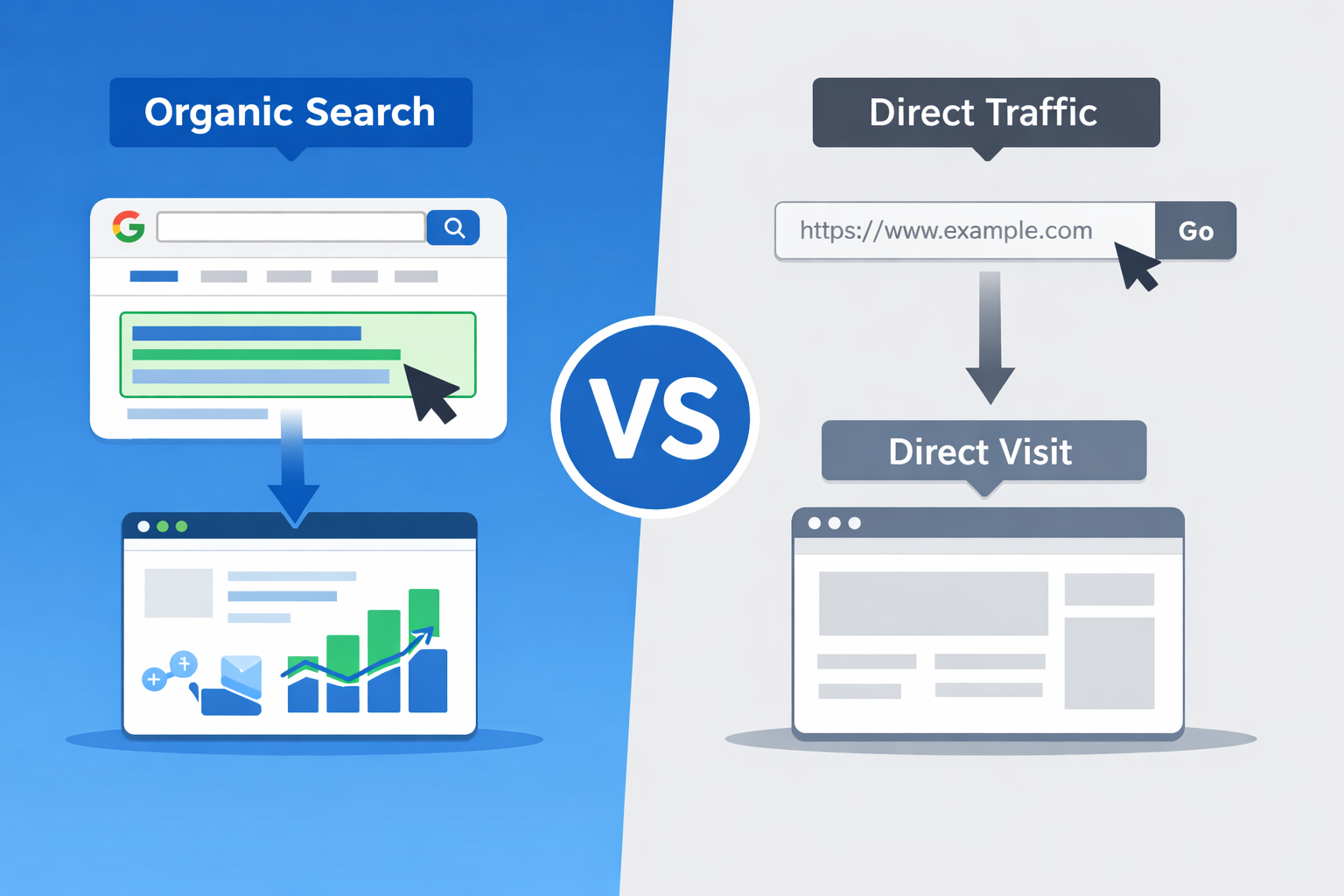
Bot traffic gets a bad reputation because most people treat it as one thing. It is not. From an SEO standpoint, the difference between organic search bots and direct traffic bots comes down to one core idea: intent.
How a visit starts determines whether Google sees it as a meaningful signal or just another page load.
Why this distinction matters for SEO
Search engines care about behavior, not just visits. A user who searches a keyword, sees your listing, and chooses it sends a very different signal than a visit that appears out of nowhere.
That difference shows up in two places. Google Search Console records impressions, clicks, and CTR only when a visit starts on the SERP. Google Analytics, on the other hand, simply logs how a session arrived.
If traffic never touches the search results page, it never contributes to organic search signals. That is why the source of traffic matters as much as volume.
What is an organic search bot?
An organic search bot is designed to replicate how a real user discovers a site through Google.
How it works
Instead of loading a URL directly, an organic search bot follows the same path a human does:
- Searches a keyword on Google
- Views the search results page
- Clicks an organic listing
- Spends time on the site
Because the interaction begins on the SERP, the activity is logged as a real organic impression and click in Search Console.
What it affects
When implemented correctly, organic search bots reinforce SEO-relevant signals. They can increase click-through rate on target keywords, strengthen keyword to page relevance, and support engagement signals such as dwell time.
CTR alone will not rank a page. But for keywords already ranking, improved interaction can help nudge visibility in the right direction.
SearchSEO’s approach
SearchSEO is built specifically around organic search behavior. It focuses on keyword-based searches, real browsers, residential IPs, and natural interaction patterns. There are no fake referrers or shortcut tactics. The goal is to reinforce real user behavior, not fabricate traffic.
What is a direct traffic bot?
A direct traffic bot skips the search step entirely.
How it works
Instead of searching a keyword, it opens your site directly. The session is logged as Direct traffic in Google Analytics, with no associated keyword, impression, or SERP interaction.
What it affects
Direct traffic bots can raise visit counts, but they do not influence SEO signals. They do not improve CTR, do not register in Google Search Console, and do not reinforce keyword relevance.
Google sees a session, but not the intent behind it.
Common use cases and risks
Direct traffic bots are often used for testing, demos, or inflating surface-level metrics. The downside is that they are easier to flag as suspicious and can distort engagement and conversion data. For SEO, they offer little long-term value.
SEO impact: organic search bots win
Why CTR and behavior matter
Google does not publish a single ranking factor called CTR. But it does evaluate how users interact with search results. Pages that earn more clicks and hold attention tend to look more relevant over time.
Organic search bots participate in this full interaction loop. Direct traffic bots do not.
How to use organic search bots safely
The quality of the tool matters more than the concept itself.
A safe organic search traffic bot tool should simulate the full search journey, use varied IPs and browsers, allow realistic dwell time, and operate at keyword level rather than URL-only hits. Anything less starts to look artificial.
SearchSEO was built with those constraints in mind. It is designed to support organic visibility and Search Console metrics, not vanity spikes in analytics.
Choose traffic that actually moves the SEO needle
Not all traffic is equal, and not all bots are harmful. What matters is whether the traffic behaves like a real searcher.
Direct traffic bots add volume without meaning.
Organic search bots reinforce signals Google already cares about.
If rankings are the goal, intent-driven traffic wins.


.svg)