

.svg)

.svg)
%201.png)


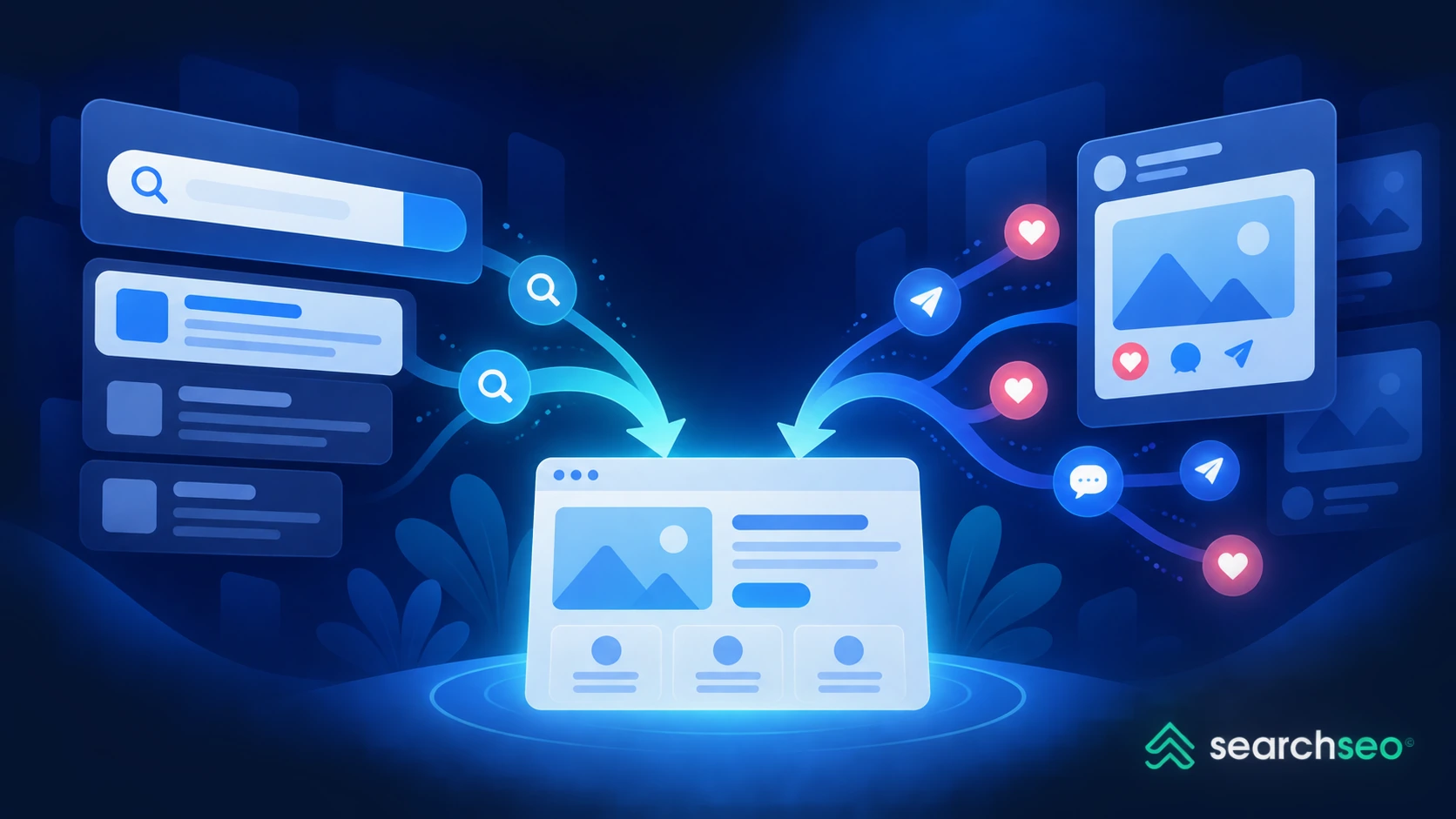
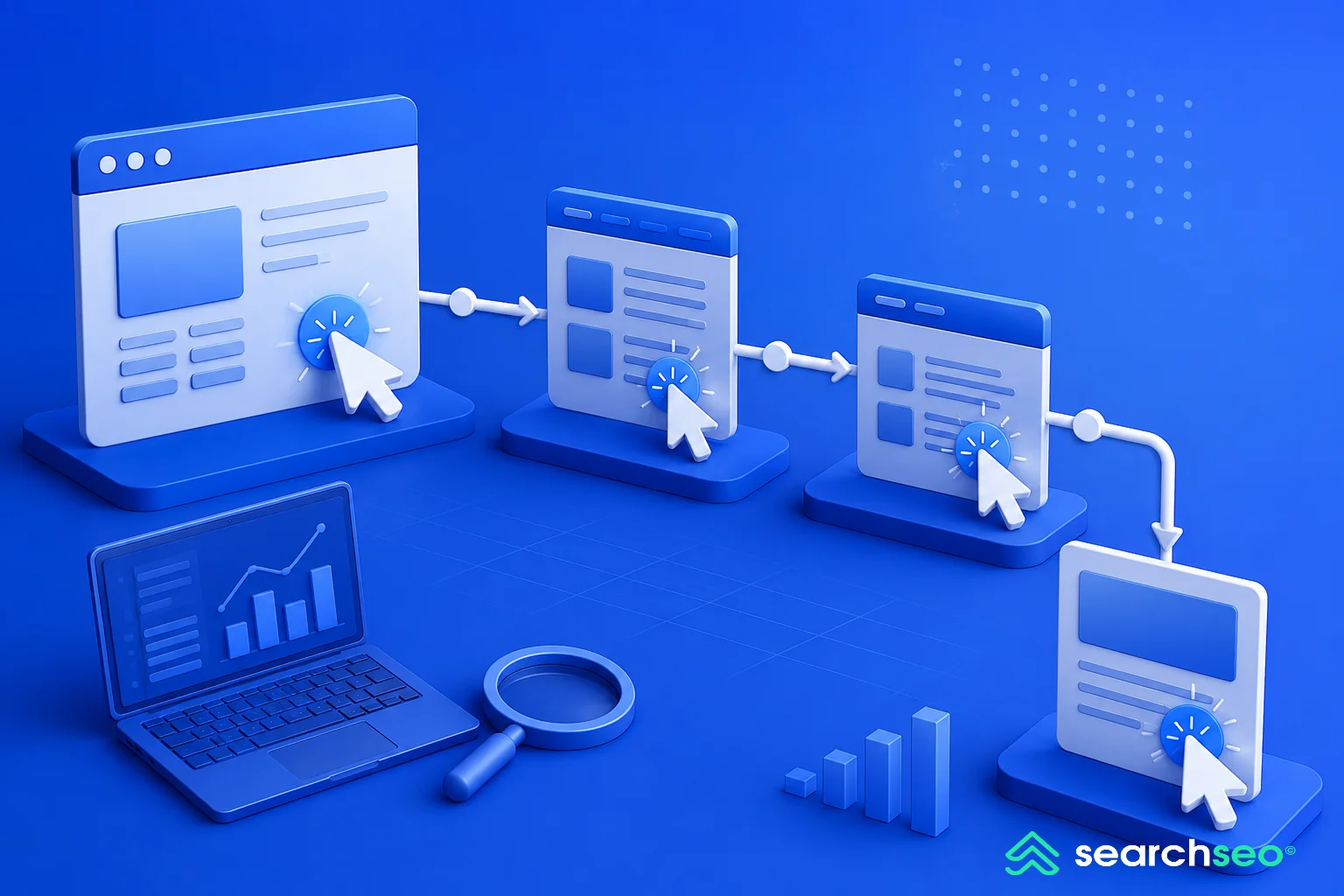

If you’re trying to influence rankings beyond traditional SEO, you’ve probably looked at two things: CTR bots and social signals.
Both sit in the “behavioral signals” space. Both promise visibility gains. But they work very differently and carry very different levels of control and risk.
So which one actually helps your rankings? Let’s break it down.

What is a CTR bot?
A CTR (click-through rate) bot simulates real users clicking your website on search engine results pages. It mimics search behavior to increase your listing’s perceived popularity and relevance.
The goal is to send stronger engagement signals to search engines without waiting for organic users to discover and click your page.
Why SEOs use CTR bots
CTR bots are often used to test ranking sensitivity and improve underperforming pages. They give you a level of control that organic traffic simply cannot provide.
They’re especially useful when you want to push pages already ranking on page one into higher positions.
- Improve low CTR on ranking pages
- Test if behavioral signals influence rankings
- Push pages from positions 5–10 into top 3
What are social signals?
Social signals refer to engagement metrics from platforms like Facebook, X, LinkedIn, and TikTok. These include likes, shares, comments, and clicks to your website.
Unlike CTR bots, these signals come from real users interacting with your content across different platforms.
Why marketers focus on social signals
Social signals help distribute your content to a wider audience and bring in real traffic. They are a strong driver of visibility, especially for new or trending content.
Over time, they can contribute to stronger brand presence and increased trust.
- Drive traffic
- Increase brand awareness
- Amplify content reach
CTR bot vs social signals: the core difference
The main difference comes down to how each strategy influences search engines. One is direct and controlled, while the other is indirect and organic.
Understanding this difference helps you decide where to focus based on your goals.
CTR bots
CTR bots directly simulate search behavior and influence click-through rate. They are precise and can be scaled based on your needs.
They are best used for targeted improvements rather than broad exposure.
- Directly influence search behavior
- Target specific keywords
- Highly controllable
- Faster feedback loop
Social signals
Social signals work by increasing visibility and attracting real users. They don’t directly impact rankings but create a ripple effect that can.
They are slower but more sustainable in the long run.
- Indirect influence on SEO
- Broader audience exposure
- Harder to control
- Slower impact on rankings
CTR bots = precision tool
Social signals = amplification tool
Do social signals directly affect rankings?
Social signals are not a direct ranking factor according to Google. However, they still play a role in your overall SEO performance.
They help create the conditions that lead to better rankings over time.
Here’s what they actually do:
- Drive traffic to your site
- Increase brand searches
- Attract backlinks
- Improve content visibility
Do CTR bots work for rankings?
CTR bots operate in a more direct space by influencing user interaction signals. They can increase click-through rates and simulate engagement patterns.
This can sometimes lead to ranking improvements, especially for pages already close to the top.
However, they only work when paired with strong SEO fundamentals. If your content doesn’t match intent, results won’t last.
The real SEO play: control vs credibility
This is where the comparison becomes more strategic. You’re not just choosing a tactic, you’re choosing how you influence search engines.
Both approaches have value, but they serve different purposes.
CTR bots = control
CTR bots give you the ability to control behavior signals. You can test quickly and adjust based on performance.
This makes them ideal for experimentation and short-term gains.
Social signals = credibility
Social signals build trust and authority over time. They rely on real user engagement, which makes them more sustainable.
You don’t control them directly, but when done right, they compound.
When to use CTR bots
CTR bots are most effective when you already have some visibility. They help refine and improve what’s already working.
They are not designed to build rankings from scratch.
Use them when:
- You already rank on page 1
- Your CTR is below average
- You want to test ranking sensitivity
- You need a short-term push
When to focus on social signals
Social signals are best for expanding reach and building a brand. They are essential for long-term growth and audience development.
They also support other SEO efforts indirectly.
Focus on them when:
- You’re launching new content
- You want visibility beyond search
- You’re building a brand
- You’re aiming for backlinks
The smart strategy: combine both
The best SEO strategies don’t rely on just one approach. They combine different signals to create a stronger overall impact.
CTR bots and social signals can complement each other when used correctly.
Use social signals to generate awareness and real traffic. Then use CTR optimization to improve performance on search results.
On-page SEO still comes first.
What actually improves rankings?
At the core, rankings improve when your content meets user expectations. Everything else supports that goal.
You need to align multiple signals to see consistent results.
- Relevance – Your content matches the query
- Engagement – Users click and stay
- Authority – Your site earns trust
CTR bots support engagement. Social signals support authority. Your content drives relevance.
Final thoughts
CTR bots and social signals are both valuable, but they operate differently. One gives you control, while the other builds credibility.
The real advantage comes from knowing when to use each.
If you rely only on shortcuts, results won’t last. But if you combine strategy with strong fundamentals, you can create sustainable growth.


.svg)