

.svg)

.svg)
%201.png)


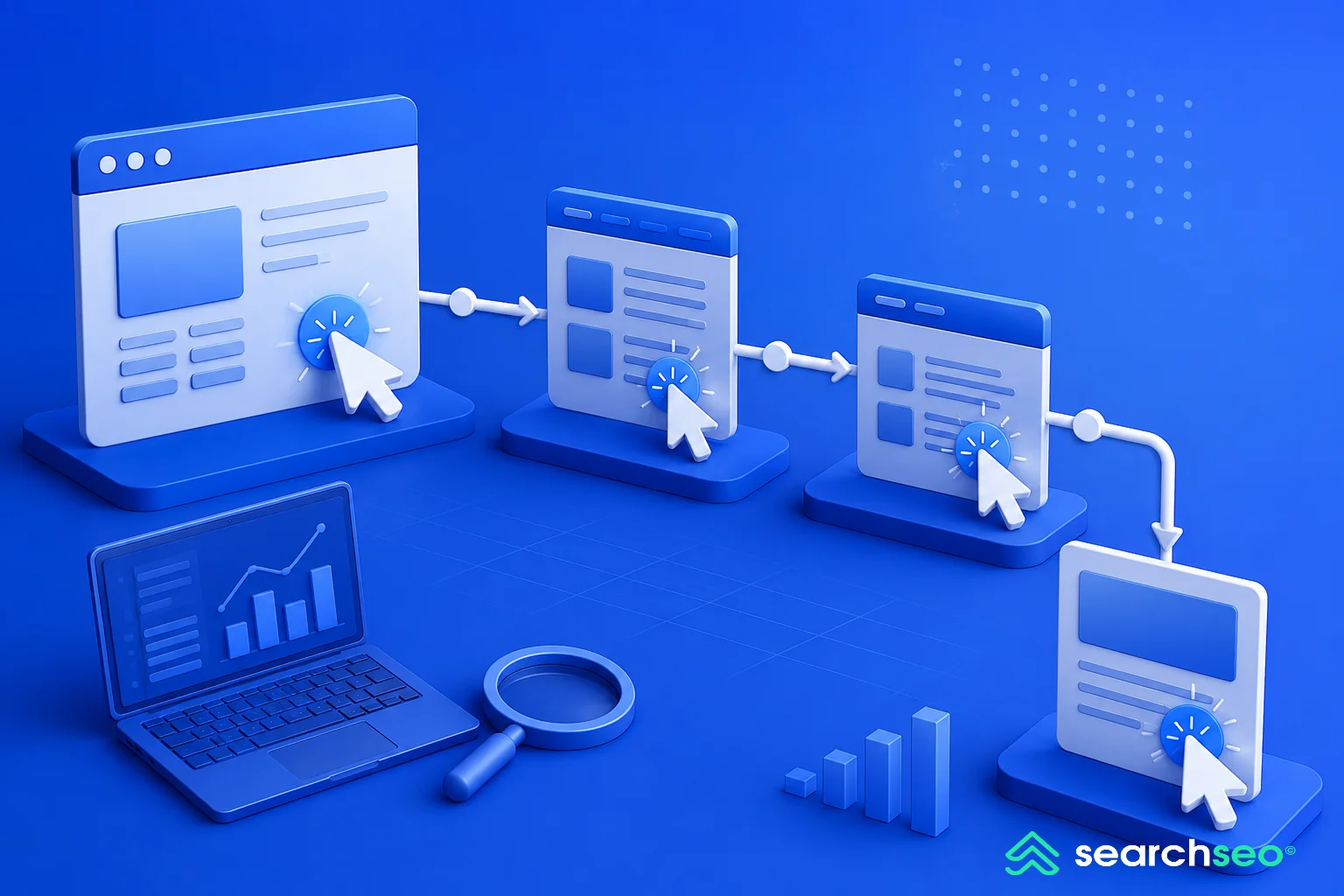


A practitioner's guide to buying Bing traffic the right way, including what it actually involves, how Bing's ranking signals respond to it, and what separates a credible provider from a hit-counter mill.
If you have searched for how to buy Bing traffic, you have probably noticed the results are not very helpful. Most of what shows up is either a generic traffic reseller selling raw visitor counts with no SEO framing at all, or a multi-engine tool that treats Bing as an afterthought next to Google. Neither answers the actual question: what does buying Bing traffic for SEO purposes really involve, and how do you do it without wasting money or risking your site.
This guide answers that directly. We will cover what buying Bing traffic actually means, how Bing's ranking algorithm responds to click and engagement signals, what to look for in a provider, and the exact steps to set up a campaign through SearchSEO's Bing traffic service.
Quick definition
Buying Bing traffic, in the SEO sense covered here, means paying for real, keyword-matched search sessions that land on your site from Bing's results page. It is a behavioral signal service, not a bot that inflates a hit counter, and not the same thing as running Bing Ads.
Why Bing traffic deserves a place in your SEO strategy
Bing is easy to overlook because Google dominates so much of the conversation around search. But it is the default search engine across a large share of Windows and Microsoft Edge installations, it powers a meaningful portion of Yahoo's organic results, and it is often the only search engine permitted on managed corporate devices. That combination means a real, often higher-income audience is searching on Bing every day, with far fewer SEOs actively competing for visibility there.
Lower competition is the practical reason buying Bing traffic is worth considering as part of a behavioral SEO strategy. The same click-through-rate and engagement signals that move the needle on Google apply on Bing too, but because so few sites are actively working that signal, the effect of a well-targeted campaign tends to show up faster and more clearly.
This matters most for SEOs and agencies running campaigns in B2B, professional services, finance, and other categories where Bing's enterprise and Windows-default audience overlaps heavily with the buyer profile. For a closer look at the audience and channel opportunity, our guide to Bing B2B traffic explains why these clicks can be unusually valuable. If your clients already invest in Google-focused CTR work, adding a Bing-specific layer is often the fastest way to pick up incremental visibility without fighting for the same crowded keyword space everyone else is competing for on Google.
What buying Bing traffic actually means
Behavioral, CTR-style traffic vs. raw visitor mills
There are two very different things being sold under the umbrella of "Bing traffic," and conflating them is where most buyers go wrong. The first is a raw visitor package: a fixed number of hits delivered to your URL with no search context, no keyword targeting, and nothing that resembles an actual Bing user journey. The second is behavioral or CTR-style traffic, where real browser sessions search your target keyword on Bing, find your listing, and click through exactly the way an organic searcher would.
Only the second type does anything useful for SEO. Bing's algorithm, like Google's, is reading engagement signals in context: did this visit originate from a real search, did the keyword match, did the visitor behave like someone who found what they were looking for. A visitor mill cannot replicate that context because it was never built to.
Where this sits next to Bing Ads (PPC)
It is also worth separating this from Bing Ads. Bing Ads is paid search; you bid on keywords and pay per click on a sponsored listing, and the traffic you get is explicitly labeled as paid in your analytics. Buying Bing traffic for SEO, by contrast, is about generating organic-style search and click behavior on your organic listing. The goal is to support your unpaid rankings, not to run a paid campaign. If your goal is to influence organic visibility, this guide and not a PPC platform is the relevant path.
How Bing's ranking algorithm uses click and engagement signals
Verbatim keyword matching and why it matters for a traffic campaign
Bing weighs exact and near-exact keyword matching more heavily than Google does. Where Google has invested heavily in understanding intent and synonyms, Bing still rewards content and search queries that line up closely with the literal phrase. That has a direct, practical consequence for anyone buying Bing traffic: the keyword list you hand a provider needs to mirror the way real searchers phrase the query, not a loosely related theme. A campaign built around close variants of your actual target phrase will outperform one built around broad topic matching. For more detail on the mechanics behind this, see our breakdown of how SEO works on Bing.
Dwell time, CTR, and indexation status in Bing Webmaster Tools
Beyond keyword matching, Bing's ranking signals respond to the same engagement basics that matter on any search engine: click-through rate from the results page, dwell time once a visitor lands, and whether the page is cleanly indexed in the first place. Bing Webmaster Tools is the place to confirm indexation and monitor how your keyword-level click data is trending over time. Before launching any traffic campaign, it is worth confirming your target pages are indexed and free of crawl errors; traffic sent to a page Bing has not properly indexed will not move the needle.
Why Bing traffic behaves differently than Google traffic
Audience profile: older, higher-income, less competitive search environment
Bing's audience skews older and tends to have higher household income than the average Google searcher, largely a byproduct of its default placement on enterprise and government devices. That demographic profile, combined with a smaller pool of advertisers and SEOs actively competing for visibility, is part of why ranking movement on Bing often happens faster than the equivalent effort on Google. For a fuller comparison of how the two platforms diverge, see Bing SEO vs. Google SEO, and for more on who is actually doing the searching, see our look at Bing user behavior.
Conversion rate differences worth knowing
Several SEO practitioners who track this closely have reported that Bing-sourced organic traffic converts at a comparable or sometimes higher rate than Google traffic for the same site and offer. That is not a universal rule and it will vary by vertical and audience, but it is a reasonable additional argument for treating Bing as more than an afterthought, particularly for B2B, professional services, and higher-ticket consumer offers where Bing's demographic skew tends to line up well.
What to look for in a Bing traffic provider
Geo-targeting and keyword-matched sessions
A credible provider lets you specify the keyword each session searches and the country or region the session originates from. If a service cannot tell you which keywords it is searching on your behalf, it is not delivering behavioral SEO traffic, it is delivering hits.
Real browser and session behavior vs. simple hit counters
Look for a provider that uses real browser sessions with unique IPs, not a script that pings your server directly. Real sessions actually load the Bing results page, locate your listing, and click through, which is the only way to generate the kind of signal Bing's algorithm is built to recognize. This is the same behavioral mechanism behind our broader CTR manipulation approach, applied specifically to Bing's search results.
Transparency and reporting visibility
You should be able to see campaign activity reflected in your own analytics and in Bing Webmaster Tools, not just inside the provider's dashboard. A provider confident in what it is delivering will not object to you cross-checking the data independently.
Red flags to avoid
Be cautious of any service that cannot tell you what keyword a session searched, that quotes pricing purely by visitor count with no mention of targeting, or that promises a specific ranking position rather than describing the signal it sends. The table below summarizes the difference.
How to buy Bing traffic with SearchSEO (step by step)
- Create a free trial account. Sign up on SearchSEO's Bing traffic page to access a short trial credit, which is enough to see how the keyword-matched sessions actually behave before committing to a paid plan.
- Define your target keywords and geography. List the exact phrases you want sessions to search on Bing, along with the country or region each session should originate from. Favor close variants of your real target queries over broad topic terms, in line with how heavily Bing weighs exact matching.
- Launch and monitor your campaign. Once the campaign is live, track keyword-level click data in Bing Webmaster Tools alongside your own analytics, and adjust the keyword list over time based on which queries are showing movement.
Is buying Bing traffic safe for SEO?
Used the way described in this guide, yes. The risk most people are actually worried about is bot traffic that behaves nothing like a real searcher: no real browser, no real keyword search, no plausible click pattern. That kind of traffic is easy for any search engine to discount or flag, which is the reputational risk people are really referring to when they ask if "buying traffic" is safe.
The safer framing is to treat this the same way you would treat any other SEO tactic: judge it by the realism of the signal, not by the fact that money changed hands. Backlinks, content updates, and technical fixes are all things SEOs pay for or invest time in specifically because they influence ranking signals. Keyword-matched Bing traffic from real browser sessions is no different in principle; it is simply a more direct way to influence the engagement signals Bing already factors into its algorithm.
Why behavioral realism matters
Keyword-matched, geo-targeted sessions that move through a real browser and click through from an actual Bing results page are functionally indistinguishable from organic search behavior, because that is exactly what they are. The safety question comes down to whether the traffic you are buying actually behaves like a real search, not whether buying traffic is inherently risky.


.svg)